Source food grade TKPP when a formulation needs alkaline pyrophosphate functionality with potassium instead of a sodium pyrophosphate. Compare solution pH, mineral load, protein or cheese performance and destination-market rules before approval.
Include quantity, destination, application and required compliance documents for a useful quotation.
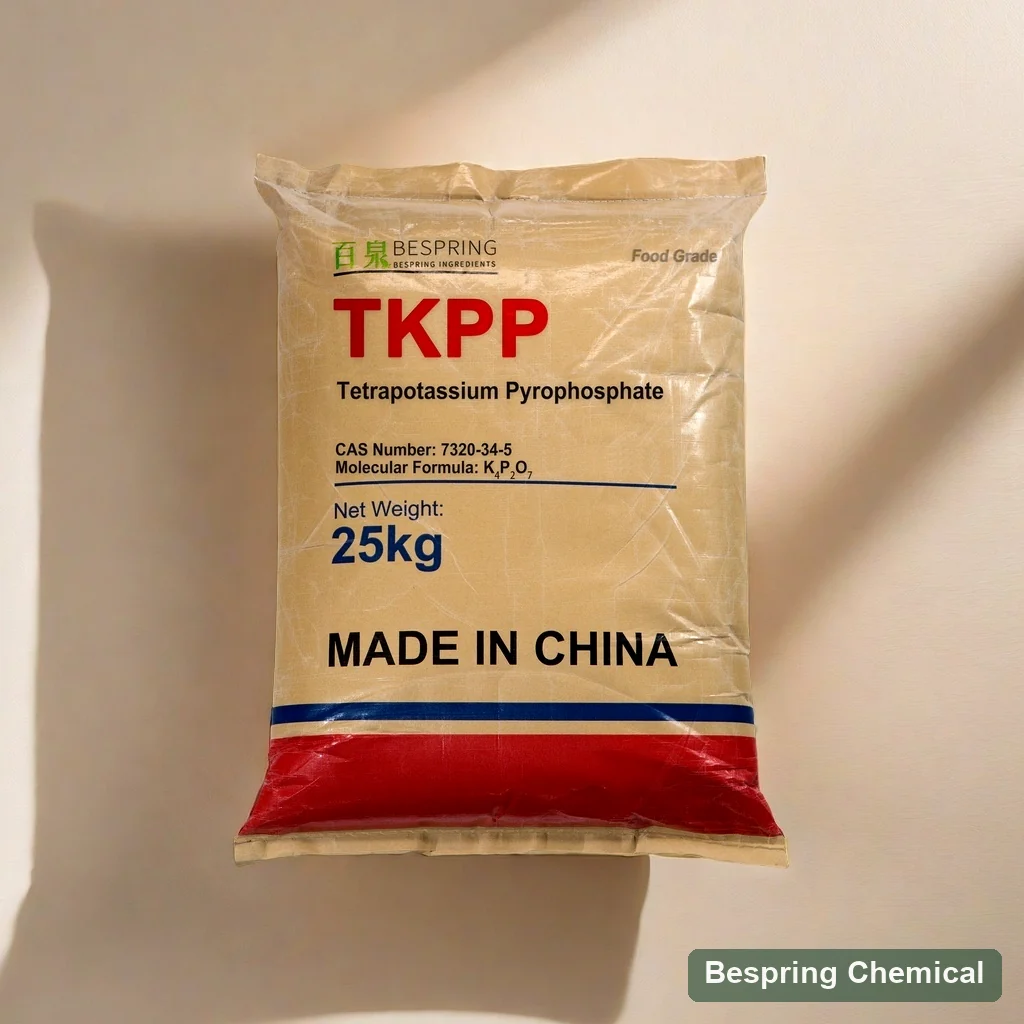
TKPP bag
Reference assayK₄P₂O₇ content ≥ 95.0%
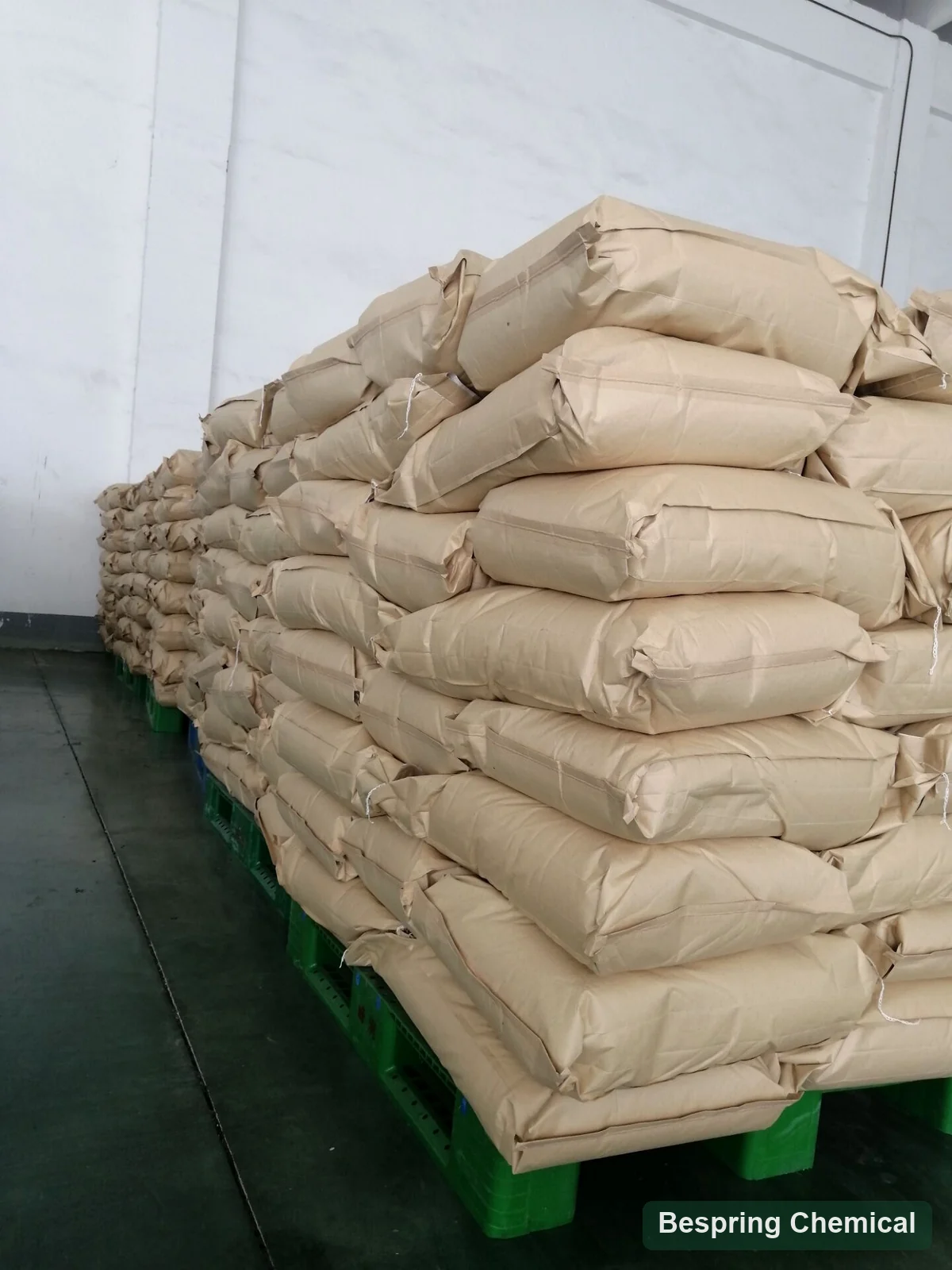
Standard packing25 kg bag
Container loadingReference: 20 MT / 20' FCL
Document supportCOA, TDS, SDS and applicable certificates
Product overview
What is tetrapotassium pyrophosphate?
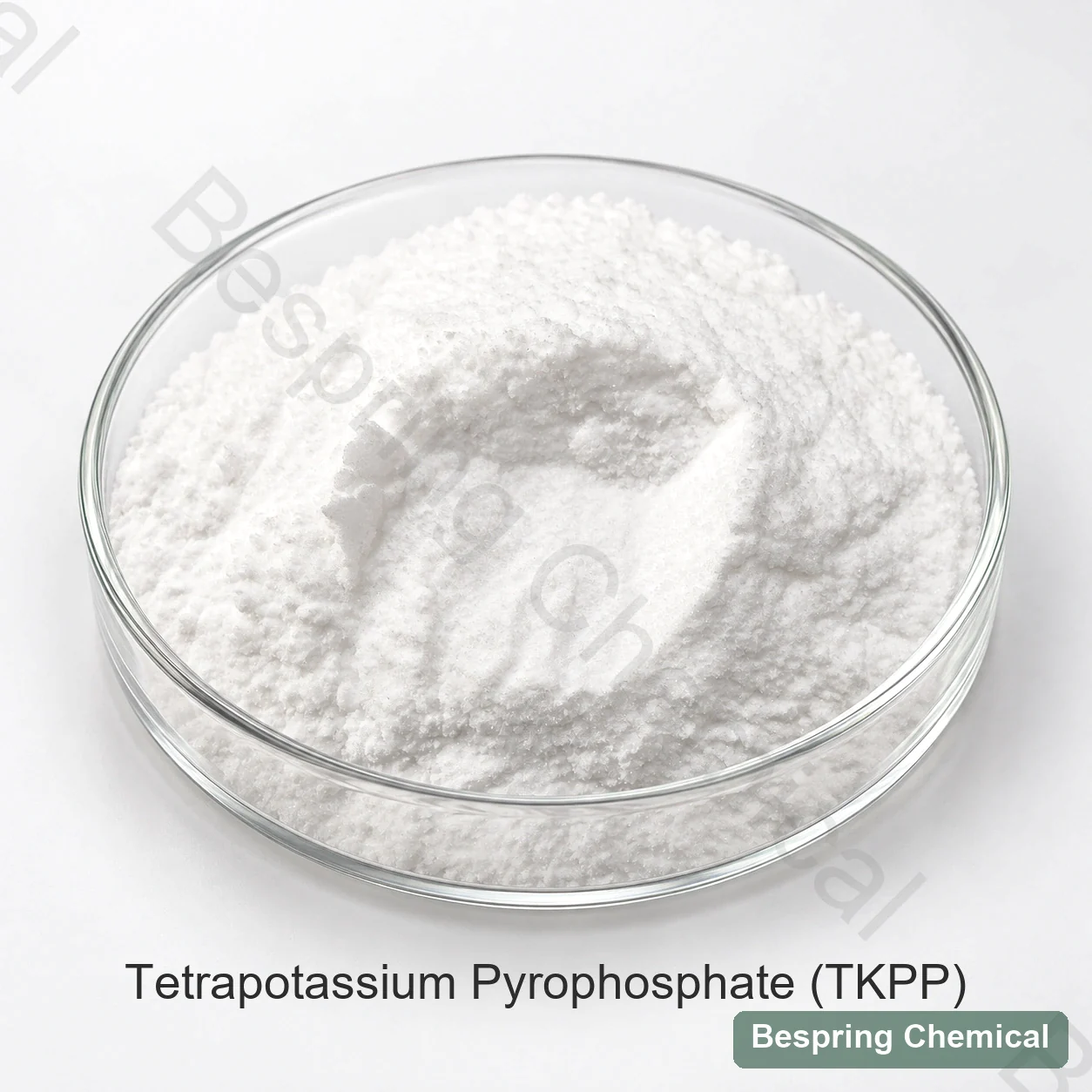
Tetrapotassium pyrophosphate (TKPP), also called tetrapotassium diphosphate or potassium pyrophosphate, is the potassium salt of pyrophosphoric acid. Its chemical formula is K4P2O7, its CAS number is 7320-34-5, and its international food additive designation is INS 450(v).
TKPP is hygroscopic and highly soluble in water. Its combination of alkalinity, phosphate functionality and metal-ion binding makes it useful in carefully designed food-processing systems. The appropriate dosage and legal use must be determined for the specific food category and destination market.
Potassium-based phosphate decision
When should a formulator evaluate TKPP?
TKPP is not simply a premium substitute for every sodium phosphate. Its value must be tested against the sodium target, potassium contribution, required pyrophosphate function, solution behavior and finished-food performance.
01
Sodium contribution
TKPP does not add sodium from the phosphate salt itself, so it may be screened against TSPP in sodium-reduction work. This does not make the finished food “low sodium”; calculate every sodium source and verify the legal claim criteria.
02
Potassium load
Pure anhydrous K4P2O7 is theoretically about 47.4% potassium by mass. Use the offered grade's certified composition for formulation and nutrition calculations.
03
Alkalinity and flavor
JECFA specifies pH 10.0–10.7 for a 1% solution. Excessive or poorly balanced use can change finished pH, flavor, color and protein texture.
04
Dissolution environment
Although TKPP is water-soluble, practical dissolution depends on concentration, temperature, water hardness, agitation, salt content and ingredient order. Check clarity and sediment in the actual brine or process water.
Claim boundary: replacing a sodium phosphate with TKPP can reduce sodium contributed by that ingredient, but nutritional claims require a calculation for the complete finished food and the destination market.
Functional roles
Why is TKPP used in food processing?
JECFA identifies TKPP as an emulsifier and texturizer. In applied systems, its alkaline pyrophosphate ion can also influence mineral–protein interactions; performance must be demonstrated in the complete formula.
Function 01
Mineral and pH management
Pyrophosphate can interact with polyvalent ions while TKPP raises solution pH. This may change protein hydration or emulsion behavior, but excessive alkalinity can create sensory and texture defects.
Metal-ion sequestration
Check water hardness and calcium load
Measure solution and finished-product pH
Function 02
Protein and emulsion functionality
In suitable meat or cheese systems, an alkaline phosphate system can support protein hydration and fat–water stabilization. Raw material, salt, shear, temperature and total phosphate determine the result.
Emulsifier and texturizer functionality
Protein extraction and hydration screening
Cook loss, purge and texture validation
Food industry uses
Common food grade TKPP applications
These are qualification pathways rather than universal permissions or dosage recommendations. The strongest technical fit is where potassium-based pyrophosphate functionality is deliberately required.
Meat and poultry brines
Compare TKPP within a phosphate system when sodium contribution, protein extraction, water binding or emulsion stability is under review. Record brine clarity, pickup, cook loss, chilled purge, texture and sensory quality.
Processed cheese systems
Screen calcium sequestration, casein hydration and fat–water emulsification. Control natural-cheese composition, calcium, moisture, pH, heating, shear and cooling before judging slice or spread texture.
Seafood processing
Where permitted, compare TKPP or a phosphate blend for solution behavior and retained yield. Report pickup after equal drainage, thaw/cook loss, texture and phosphate labeling rather than pickup alone.
Potassium-based phosphate blends
Use TKPP as one component only when its alkalinity and pyrophosphate functionality help meet a defined sodium, solubility or performance target. Validate blend compatibility and storage stability.
Technical information
Food grade TKPP reference specification
The following values reproduce the supplied Bespring specification sheet for initial procurement review. They are not a batch COA or a statement of conformity to every international compendium. Confirm the current signed specification and test methods before ordering.
Source label/method is ambiguous; JECFA LOI uses two heating stages
Cadmium (Cd)
mg/kg
≤ 1
Supplied commercial parameter
Mercury (Hg)
mg/kg
≤ 1
Supplied commercial parameter
Appearance
—
White powder or granules
JECFA: crystals or crystalline/granular powder
Specification decision: The supplied fluoride limit of 30 mg/kg does not meet the current JECFA or EU 10 mg/kg limit. The arsenic and lead limits also differ from current EU limits. Do not claim JECFA or EU conformity until the exact offered grade and COA meet the selected standard.
JECFA identity and specification
JECFA lists INS 450(v), CAS 7320-34-5, formula K4P2O7, molecular weight 330.34, assay ≥95% on the ignited basis and pH 10.0–10.7 for a 1% solution.
EU E450(v) includes P2O5 42.0–43.7% on the anhydrous basis and tighter arsenic and lead limits than the supplied table. Regulatory fit must be checked for the destination.
These materials are not interchangeable by acronym or equal weight. Compare the ion, phosphate chain, alkalinity, solubility, legal identity and validated function.
TKPP
K4P2O7 · INS 450(v)
Potassium pyrophosphate; consider when potassium-based, alkaline pyrophosphate functionality is required.
Certificates and management-system documents are time-sensitive. Ask for current, applicable copies and verify the product name, site, scope, issuer and validity dates during supplier qualification.
Product documents
Current specification, technical data sheet, safety data sheet and a representative or batch-specific certificate of analysis.
Food qualification
Request the HACCP, Kosher and Halal documents applicable to the offered product and production or packing site.
Management systems
Request the current ISO certificate and scope, together with traceability or quality questionnaires required by your approval process.
Storage & handling
Protect TKPP from moisture and heat
Control temperatureStore in a cool place; the supplied guidance states a storage temperature not exceeding 30°C.
Keep packaging sealedTKPP is hygroscopic. Protect it from humidity, direct sunlight and contamination.
Follow the SDSUse appropriate workplace controls and personal protective equipment for dust handling.
A potassium-phosphate substitution should be approved from measured product and process results, not only a nutrition calculation.
1
Define the baseline
Record current phosphate, sodium and potassium sources, water chemistry, formula pH, process loss and target claim.
2
Prepare the solution
Add TKPP gradually under agitation and record temperature, concentration, ingredient order, dissolution time, clarity and sediment.
3
Compare equal conditions
Hold raw material, salt, water, shear, temperature, processing and sampling constant against the approved control.
4
Approve the complete result
Assess finished pH, sodium/potassium calculation, yield, purge, emulsion or texture, flavor, storage stability and legal labeling.
Buyer questions
Food grade TKPP FAQ
Why is TKPP evaluated instead of TSPP?
TKPP supplies potassium rather than the sodium supplied by TSPP and is water-soluble. It may fit a potassium-based or sodium-reduction strategy, but the complete sodium and potassium content, pH, functionality, flavor, cost and market rules must be assessed.
Is TKPP the same as tetrapotassium diphosphate?
Yes. Tetrapotassium pyrophosphate, tetrapotassium diphosphate and potassium pyrophosphate are commonly used names for K₄P₂O₇, CAS 7320-34-5 and INS 450(v).
Does TKPP make a finished food low sodium?
No. It avoids sodium from this phosphate salt, but sodium may still come from salt, proteins, flavors and other ingredients. Any low- or reduced-sodium claim must be calculated and validated under destination-market rules.
What must be checked before dissolving TKPP?
Define water temperature and hardness, target concentration, agitation, salt/mineral content and ingredient order. Record dissolution time, clarity, sediment and solution pH for the offered grade.
Does the supplied specification meet JECFA or EU limits?
Not as currently written: its fluoride limit is 30 mg/kg, while JECFA and the cited EU specification state 10 mg/kg. EU arsenic and lead limits are also tighter. Request a grade and batch COA matched to the required standard before approval.
What details are needed for an accurate TKPP quotation?
Provide the application, sodium and potassium targets, current phosphate benchmark, required pH/solubility/particle data, specification or compendium, quantity, packaging, destination, Incoterm and required documents.