Moisture management
Can support water binding and processing yield in suitable protein-based formulations.

Food phosphate · INS 451(i) · STPP
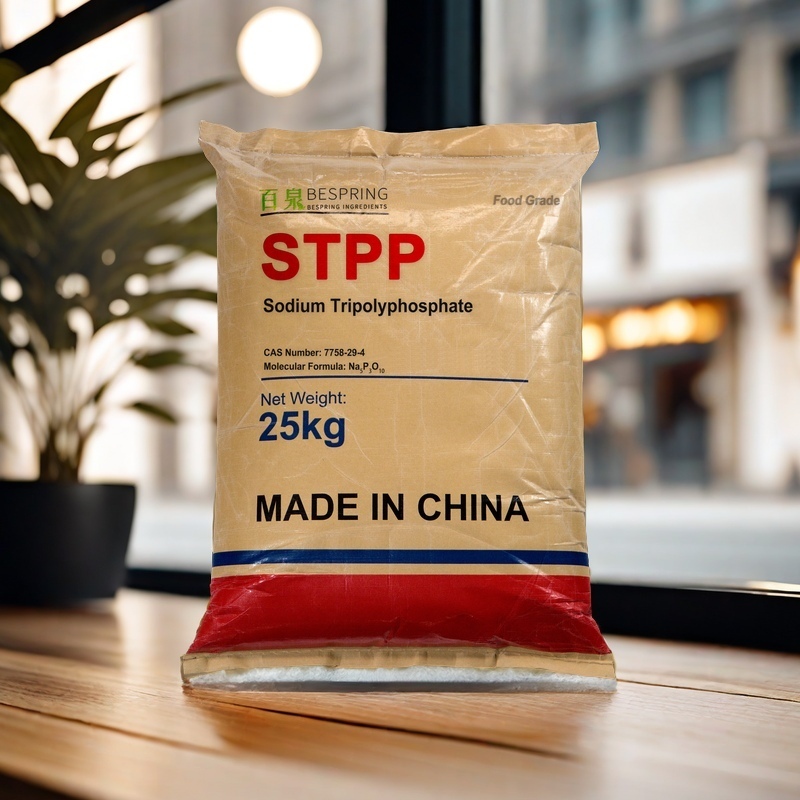
Bespring supplies food grade sodium tripolyphosphate (STPP, INS 451(i)) as white powder or granules for qualified food-processing applications. This page separates verified chemical identity, our commercial reference limits and the details a buyer should confirm before ordering.
Include required standard, quantity, pallet preference, destination and application for an efficient review.
Product overview
Food grade sodium tripolyphosphate is the pentasodium salt of triphosphoric acid. It is also known as pentasodium triphosphate and carries Codex INS number 451(i). The material is supplied as white granules or powder and is formulated into selected processed foods when phosphate functionality is required.
For procurement, “food grade” should never be treated as the whole specification. Buyers should also confirm assay, P2O5, insoluble matter, contaminant limits, particle form, test methods and destination-market documentation.
Formulation value
STPP can provide several technical functions, but performance depends on the full phosphate system, raw material, process conditions and legal use level.
Can support water binding and processing yield in suitable protein-based formulations.
Helps processors manage bite, consistency and finished-product texture in validated recipes.
Supports stable fat, protein and water systems in selected processed-food applications.
Binds certain metal ions that may otherwise interfere with product or process performance.
Typical application areas
The intended food category, dosage and declaration must be reviewed against the regulations of the manufacturing and destination markets.
STPP is considered in validated brines, marinades and processed protein systems where moisture retention, texture and process yield are important.
Food phosphates may be considered in permitted processed-cheese and broader formulated-food systems for emulsifying-salt, stabilization or mineral-ion management functions.
Product specification
The following limits reproduce a source-specific commercial product sheet. They are not a universal definition of food grade STPP; the signed specification, agreed test methods and batch COA govern an order.
| Test item | Specification | Expression |
|---|---|---|
| Assay (Na5P3O10) | ≥ 85.0 | % |
| P2O5 | 56.0–58.0 | % |
| Water-insoluble matter | ≤ 0.1 | % |
| Fluoride | ≤ 50 | ppm |
| Arsenic | ≤ 3 | ppm |
| Heavy metals | ≤ 10 | ppm |
| Lead | ≤ 4 | ppm |
| Appearance | White granules or powder | Visual |
Data-sheet notice: Results may differ because of variations in test conditions, equipment and methods. Confirm methods, sampling rules and acceptance criteria before contracting.
JECFA gap to resolve: this commercial reference lists fluoride at ≤ 50 ppm, while the cited JECFA monograph lists ≤ 10 mg/kg. If JECFA conformance is required, ask for the current signed specification and batch COA; do not infer conformance from the product name alone.
Supplier qualification
A useful quotation should identify the exact grade and acceptance criteria—not only the abbreviation “STPP.”
Confirm sodium tripolyphosphate, CAS 7758-29-4, INS/E451(i), the required food standard and intended destination market.
Align assay, P2O5, insoluble matter, contaminants, units, sampling and analytical methods.
State powder or granular preference, application and recipe conditions. If handling or hydration rate matters, also define particle size, bulk density and phase-composition requirements.
Request the current specification, batch COA and applicable supporting documents; confirm bag, pallets, quantity and destination.
Grade boundary: Food grade and technical or detergent grades should not be treated as interchangeable. Qualify the grade, facility documentation and intended legal use before approval.
Packing & logistics
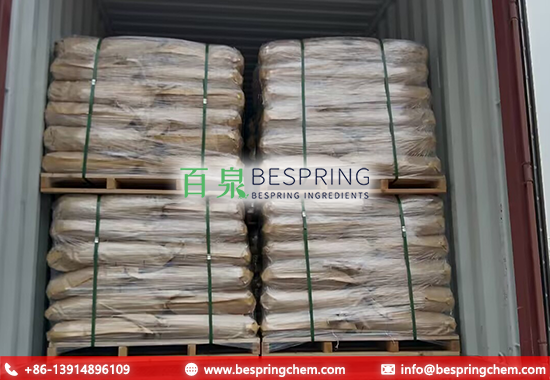
Final loading depends on container limits, route, pallet dimensions and shipping requirements.
Storage & shelf life
Related selection resources
Use these pages to compare adjacent ingredients and narrow the application before supplier qualification.
Buyer questions
It is used in permitted food applications where phosphate functionality is needed, including selected meat, poultry, seafood, dairy and processed-food formulations. The precise function and use level depend on the recipe, process and local regulations.
Pentasodium triphosphate is identified by Codex INS number 451(i). Market-specific names and permitted applications can differ, so the buyer should verify destination-market requirements.
No. This page presents the supplied reference limits. A certificate of analysis reports results for a particular batch and should be checked against the agreed purchase specification.
Not as presented. Its fluoride limit is ≤ 50 ppm, compared with ≤ 10 mg/kg in the cited JECFA monograph. Buyers requiring JECFA conformance should obtain and approve a current signed specification with the required limits and test methods before ordering.
No. The same chemical name does not establish suitability for food use. Confirm the offered grade, specification, supporting documentation, manufacturing controls and regulatory suitability for the intended market.
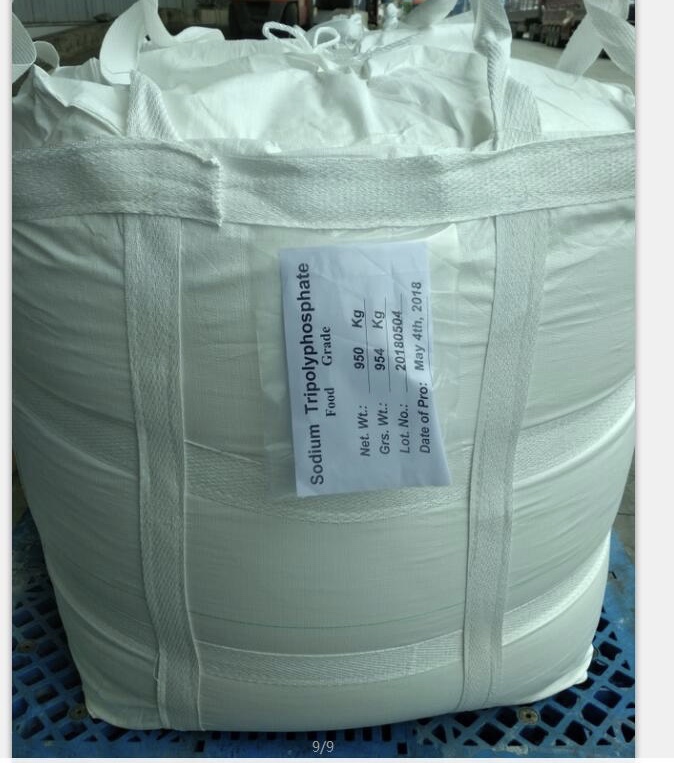
Standard packing is a net 25 kg kraft paper outer bag with an inner PE bag. Reference loading is 23 MT per 20GP without pallets or 18 MT with pallets, subject to shipment confirmation.
Provide the required food standard, powder or granular preference, quantity, packaging, pallet requirement, destination port, application and delivery target.
Ask the sales team for the specification, TDS, SDS, applicable quality documents and sample availability. State your application and destination so the relevant documents can be reviewed.
Technical content checked against the cited FAO/WHO JECFA monograph and U.S. FDA food-substance record on 22 September 2026.
Start a sourcing conversation
Share the commercial and technical details that affect product selection, container loading and landed cost.