Identity and analytical requirements
Qualify INS 342(ii), assay basis, P2O5, nitrogen, pH, moisture, insolubles and food-grade documentation.

Food grade ingredient · Phosphate, acidity regulator and yeast nutrient · INS 342(ii)
Food grade diammonium phosphate (DAP), also called diammonium hydrogen phosphate, is a water-soluble phosphate used in suitable foods as an acidity regulator, dough conditioner, raising agent or yeast nutrient.
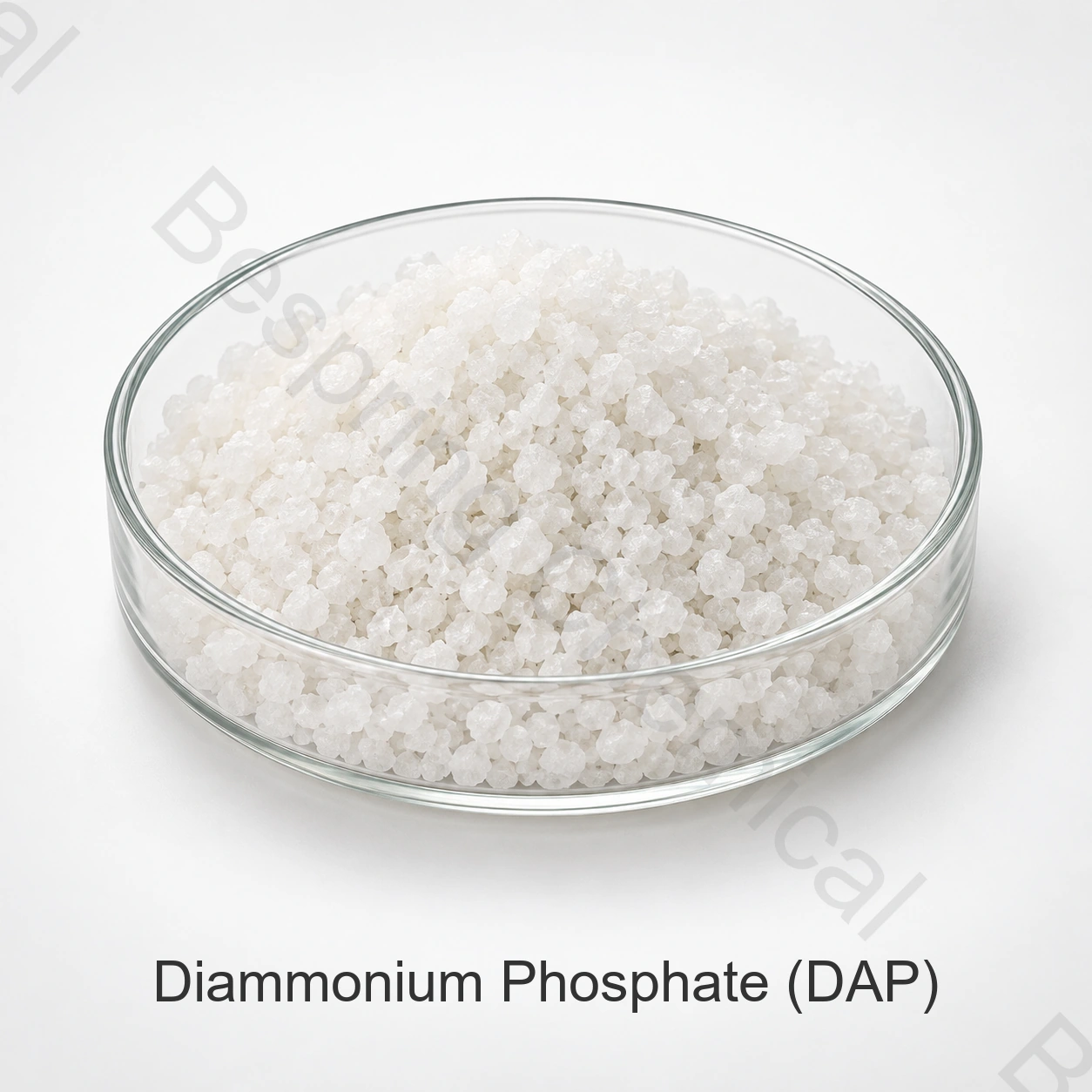
Product image · confirm grade and packaging when ordering
Share the application, critical limits, test methods, quantity, packing and destination.
GradeFood grade, subject to source qualification
PackingConfirm bag type, net weight and pallet requirement
Container loadingConfirm against selected packing and destination
Batch evidenceCurrent specification and COA required
Product overview
Food grade diammonium phosphate (DAP), also called diammonium hydrogen phosphate, is a water-soluble phosphate used in suitable foods as an acidity regulator, dough conditioner, raising agent or yeast nutrient.
For procurement, “food grade” must be supported by a current source-specific specification, suitable manufacturing and quality documents, and a batch COA. Final use depends on the complete formulation, intended function and destination-market rules.
Procurement checklist
Use these qualification points when comparing a China supplier, manufacturer source, distributor offer, bulk quotation or sample.
Qualify INS 342(ii), assay basis, P2O5, nitrogen, pH, moisture, insolubles and food-grade documentation.
Provide the fermentation or baking process, dosing point, nutrient target and destination-market requirements.
State annual volume, bag and pallet preference, destination port, Incoterm and required shipment window.
Compare pH, phosphate contribution, ammonium content and process behavior before selecting a grade.
Application screening
Application selection depends on destination-market permission and finished-food trials.
May supply ammonium and phosphate nutrients in suitable controlled processes.
Can be evaluated as a dough conditioner or raising-system component where regulations permit.
Its alkaline 1% solution can support pH adjustment or buffering in compatible recipes.
May be incorporated into validated blends after moisture, compatibility and homogeneity checks.
Commercial specifications
The table lists commercial reference limits, separate from batch COA results. Agree the analytical basis, methods and acceptance criteria in the specification for your order.
Swipe or use the keyboard to read all columns
| Test item | Supplied reference |
|---|---|
| Appearance | White crystals |
| Main content | ≥ 99% |
| P2O5 | ≥ 53% |
| Nitrogen (N) | ≥ 20.8% |
| Moisture | ≤ 0.2% |
| Water insolubles | ≤ 0.1% |
| pH of 1% aqueous solution | 7.6–8.2 |
Assay basis: The commercial limit of at least 99% is more restrictive than the cited identity reference. Compare limits only on an agreed analytical basis and method; the assay value alone does not establish conformity with the full standard.
Technical selection
Confirm the target nitrogen and phosphorus contribution rather than selecting by assay alone.
Evaluate the real formulation pH and compare DAP with the more acidic monoammonium phosphate.
Align fluoride, arsenic, lead and other destination-specific limits on the signed specification.
Confirm crystal or powder form, dust control, dissolution and storage moisture protection.
Qualification support
Request the current signed specification or TDS, SDS, test methods, representative COA and batch COA.
Verify applicable food-safety, quality, Kosher, Halal and site documents for the exact grade and source.
Review the FAO/JECFA diammonium hydrogen phosphate specification, then apply destination-market rules to the exact finished food.
Storage and handling
Buyer questions
Diammonium Phosphate is used in suitable food processes for phosphate, acidity regulator and yeast nutrient functions. Legal use, dosage and performance must be confirmed for the exact food and destination market.
Diammonium Phosphate is identified here by CAS 7783-28-0 and INS 342(ii). Confirm the identity and supplied form on the current specification.
Request the current signed specification, agreed test methods, representative COA and a current batch COA. Resolve every missing unit, comparator or particle-size requirement before approval.
Confirm bag type, net weight and pallet requirement. Confirm food-contact liner, palletization, marks and container loading in the quotation.
Provide the food application, target standard and critical limits, quantity, packing, destination, certificates, Incoterm and requested delivery date.
Related ingredients
Review another preservative option and its procurement specification.
Review another food phosphate and its sourcing considerations.
Browse the full ingredient portfolio and available technical dossiers.
Specification-led sourcing
Share the application, target grade and limits, quantity, packing, destination and required documents for a relevant bulk-supply proposal.
Tell us your grade and destination market so we can confirm which documents are available for your order.
An external reference is not a batch certificate or a Bespring product specification.