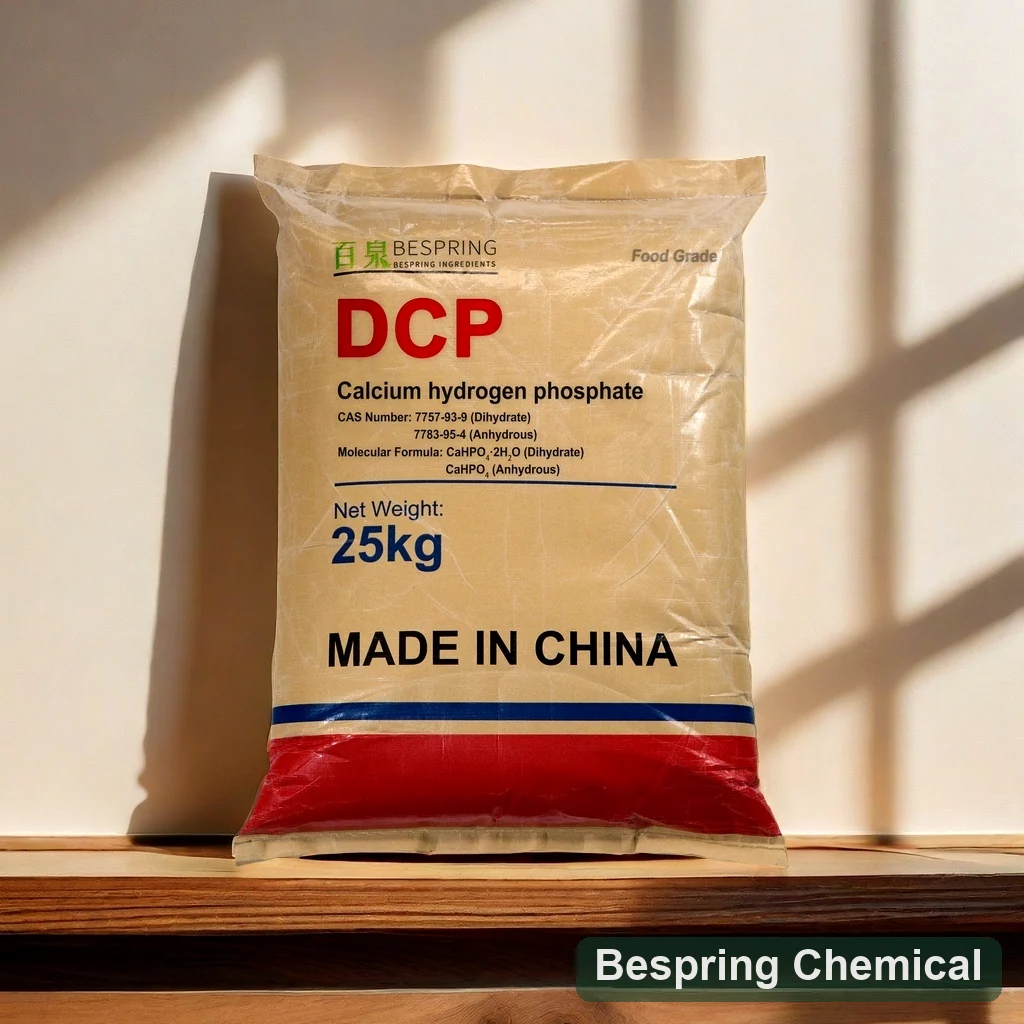
The values below are commercial purchasing references, not a batch COA or a universal regulatory standard. Confirm the hydration form, reporting basis, test methods and contractual limits before ordering.
Assay98.0–102.0%On an anhydrous basis
P2O550.0–52.5%Reference content
MOQ500 kgCommercial reference
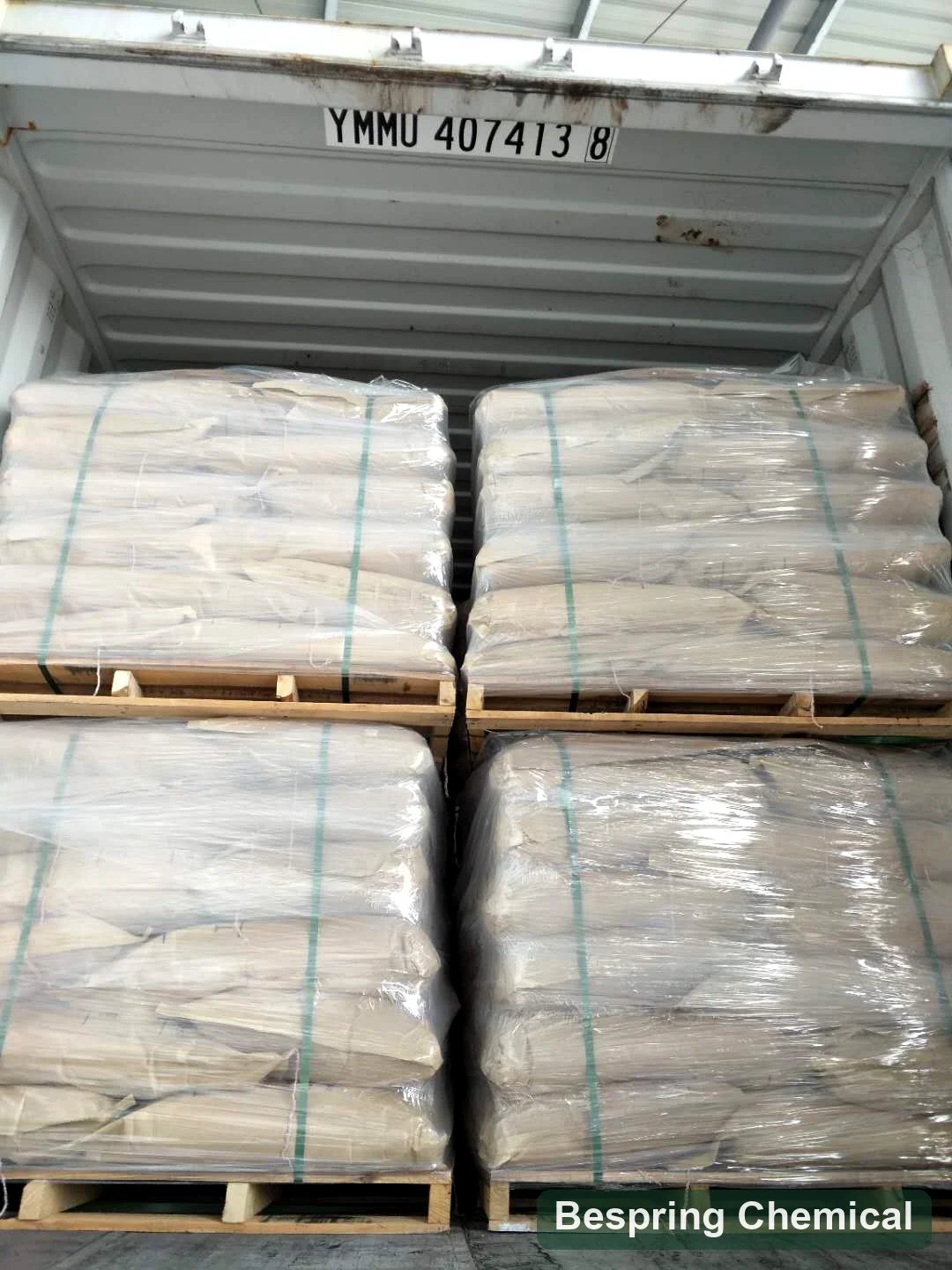
Loading22 MTReference per 20' FCL
On small screens, scroll the table horizontally to read every column.
Swipe or use the keyboard to read all columns
Calcium hydrogen phosphate (DCP) — reference purchasing specification
| Test item | Unit | Reference specification |
|---|
| Calcium hydrogen phosphate (CaHPO4) content, anhydrous basis | % | 98.0–102.0 |
|---|
| P2O5 content | % | 50.0–52.5 |
|---|
| Arsenic (As) | % | ≤ 0.0003 |
|---|
| Fluoride (F) | % | ≤ 0.005 |
|---|
| Heavy metals (as Pb) | % | ≤ 0.0015 |
|---|
| Insoluble in hydrochloric acid | % | ≤ 0.05 |
|---|
| Loss on ignition | % | ≤ 8.5 (supplied anhydrous specification) |
|---|
| Lead (Pb) | % | ≤ 0.0005 |
|---|
| Cadmium (Cd) | % | ≤ 0.0001 |
|---|
| Mercury (Hg) | % | ≤ 0.0001 |
|---|
Reporting basis and methods: Assay is stated on an anhydrous basis. Specify the P₂O₅ sample basis and analytical method. The ignition reference value is 8.5%, with an acceptance comparator that requires agreement; the table presents ≤8.5% as a purchasing reference. Establish the signed limit, ignition temperature and duration before acceptance. Loss on ignition is distinct from loss on drying, and P₂O₅ content is not an elemental phosphorus result.
Official reference and specification differences
The FAO/WHO JECFA calcium hydrogen phosphate monograph identifies CAS 7757-93-9, INS 341(ii), CaHPO4, 98–102% assay after drying, sparing water solubility, and dough-conditioner/yeast-food functions. The U.S. FDA dibasic calcium phosphate record independently lists CAS 7757-93-9 and recognized technical effects. These references support identity context; they do not certify a Bespring batch or authorize every food application.
Lead requires a tighter limit for JECFA qualification: the commercial lead value of 0.0005% equals 5 mg/kg, whereas the linked JECFA monograph specifies no more than 4 mg/kg. The listed arsenic and fluoride values convert to 3 mg/kg and 50 mg/kg respectively, matching those numerical JECFA limits. This does not establish full compliance: obtain a specification meeting every applicable requirement and batch evidence using the required methods.
JECFA specifies anhydrous loss on drying of no more than 2% at 200°C for 3 hours; the commercial ignition result does not demonstrate that requirement. “Heavy metals (as Pb)” is a separate aggregate parameter, not the individual lead test or proof that all metal limits are met.
For U.S. food-use context, see 21 CFR 182.1217 and the nutrient-supplement provisions in 21 CFR 182.8217. These provisions concern use under good manufacturing practice; assess your food category, formulation and labeling separately.