China-based chemical products supplier|Exporting to 60+ countries

Synthetic amorphous silica · E551 / INS 551

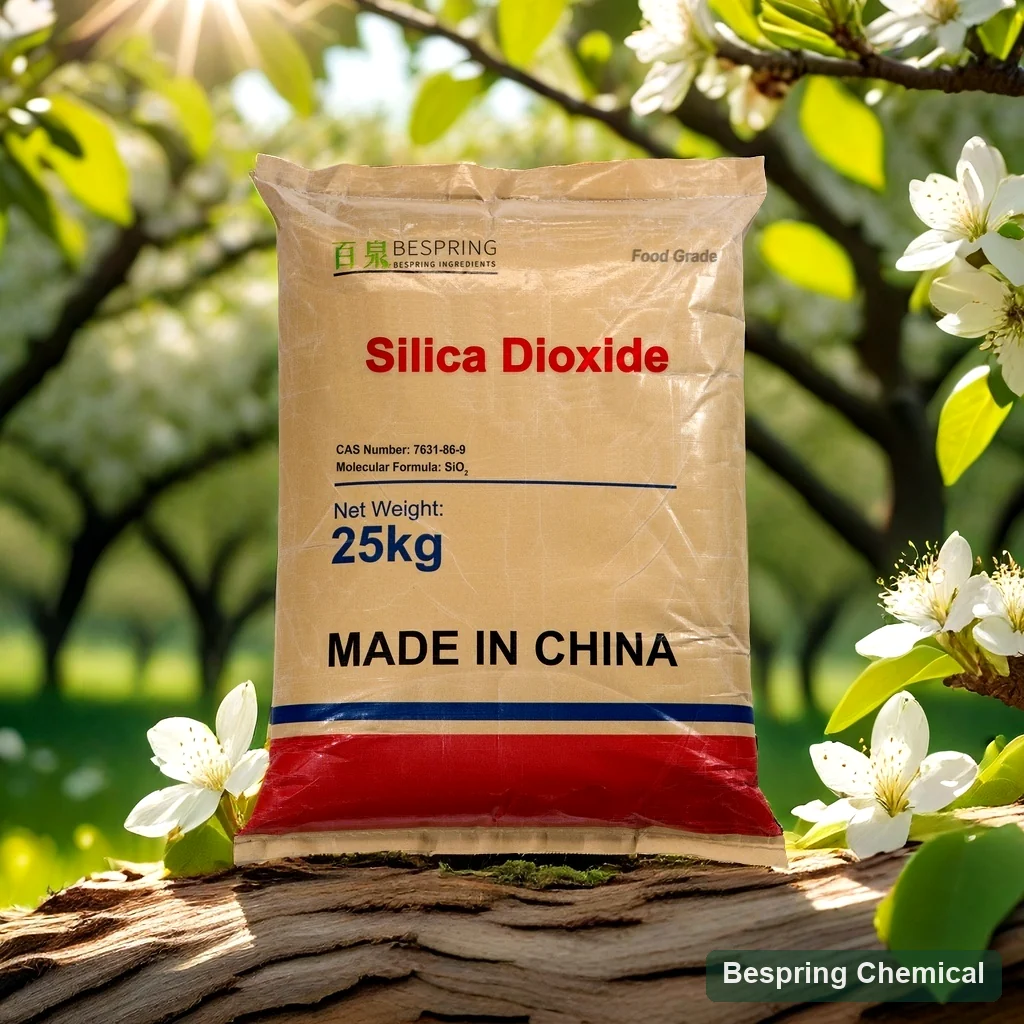
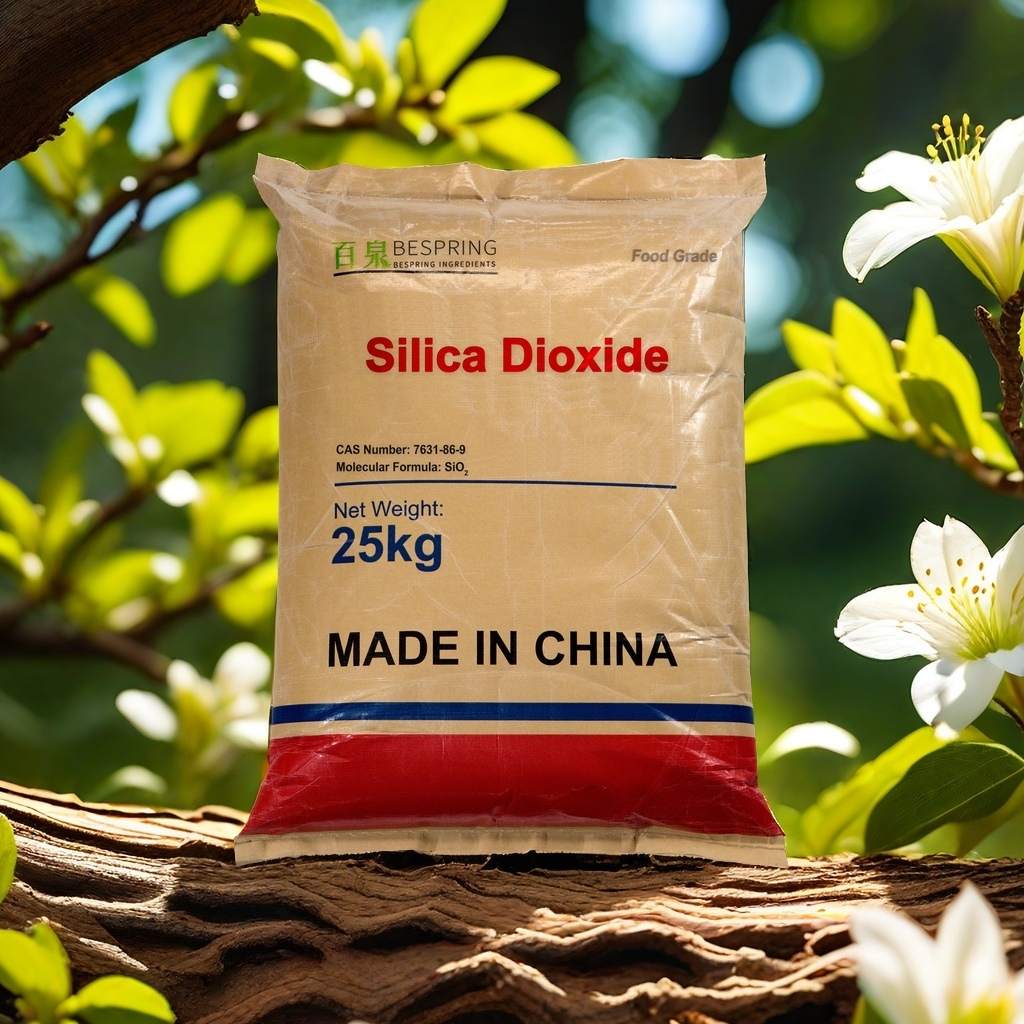
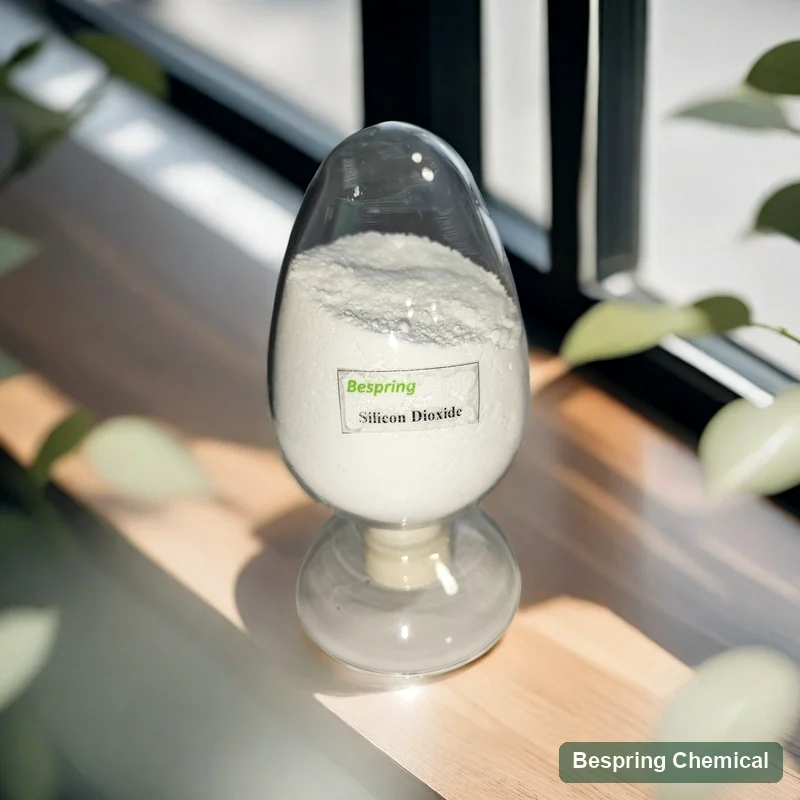
Food Grade Silicon Dioxide

Select food-grade silica by its intended job and verified method—not E551 identity alone. Anticaking, liquid carrying and beer-processing grades require different surface area, pore structure, oil absorption, particle distribution and bulk density.

CAS
7631-86-9
Formula
SiO2
Food identity
E551 / INS 551
Reference MOQ*
500 kg

*Commercial reference supplied internally; confirm availability, grade and offer revision.

Assorted powdered and granular food ingredients in bowls
Identity boundaryAmorphous, not crystalline
AnticakingProve flow after stress
Carrier selectionOil uptake + release
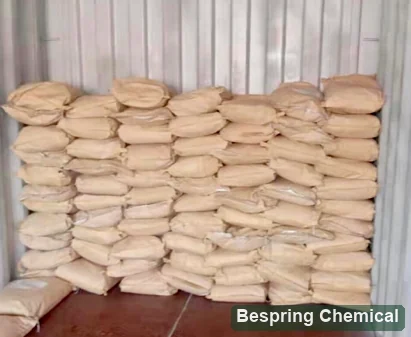
Supply reference*10/15 kg bags

A chemical name is not a complete grade

What is food grade amorphous silicon dioxide?

JECFA identifies amorphous silicon dioxide as INS 551, CAS 7631-86-9. EFSA describes E551 as uncoated, surface-unmodified synthetic amorphous silica (SAS), which may be produced as fumed silica or by wet processes yielding precipitated silica, silica gel or hydrous silica.

Crystalline silica, diatomaceous earth, silica fume and surface-modified industrial silica must not be inferred to be this food additive. The source must declare manufacturing form, food status and destination compliance.

Start with the required function

Choose E551 silica by surface structure and process

Powder flow

Anticaking grade

Evaluate moisture adsorption and particle separation in the host powder. A lower angle of repose in fresh material is not enough.

  • Flow after humidity and compression
  • Critical caking moisture
  • Segregation and dust
Liquid loading

Carrier grade

Oil absorption indicates loading potential, but release, taste, oxidation and free-flow after loading determine acceptance.

  • Loading curve and leakage
  • Bulk density after adsorption
  • Release in the final process
Beer processing

Stabilizer / filtration grade

High surface area and pore volume do not alone predict selectivity, filtration pressure or beverage loss. Run process-specific trials.

  • Target removal and dose-response
  • Pressure rise and filterability
  • Removal before final processing where required
Method equivalence is mandatoryCompare BET surface area with degassing conditions; oil absorption with liquid, endpoint and basis; particle size with dispersion and instrument; bulk density as loose or tapped. Headline numbers from different methods are not grade equivalence.

Measure the complete powder system

Food application qualification targets

Seasonings & spice blends

Test flow, caking, adhesion to snacks, dust, color dilution and aroma retention after humidity cycling.

Drink & nutrition powders

Measure hopper discharge, segregation, dispersibility, sediment, mouthfeel and package stability.

Vitamin / active premixes

Verify low-dose uniformity, liquid loading, potency recovery, oxidation, compressibility and regulatory scope.

Salt & fine crystals

Track flow and clumping under expected humidity, vibration, compression and storage—not only dry-room screening.

Use-level boundary: Codex and national provisions differ by food category and function. In the United States, 21 CFR 172.480 limits anticaking use to no more than 2% by food weight and no more than reasonably required; other stated uses have separate conditions. Apply the rule for the actual destination and food.

Supplied data under evidence audit

Silicon dioxide grade comparison

These internally supplied reference values support inquiry screening. They are not batch results, a universal E551 specification or proof of current availability.

Supplied commercial reference and audit status
FieldBeer filtration grade*Dietary supplement grade*Audit requirement
SiO2 after ignition≥96%≥96%Confirm assay and ignition methods
Loss on drying / ignition≤7% / ≤8.5%≤7% / ≤8.5%State time, temperature and basis
Lead / arsenic≤5 / ≤3 mg/kg≤5 / ≤3 mg/kgCompare with current destination and customer limits
“Heavy metals as Pb”≤30 mg/kg≤30 mg/kgLegacy aggregate test; request element-specific panel
Soluble salts≤4%≤4%Confirm method and ionic profile if critical
Bulk density<0.3 g/mL<0.3 g/mLClarify loose/tapped and conditioning
Surface area≥400 m²/g190–260 m²/gBET method and degassing conditions
Oil absorptionNot stated≥2.0 mL/gLiquid, endpoint, method and repeatability
Average particle size8–20 μm10–20 μmMethod and distribution missing; average alone is insufficient
Pore volume0.9–1.6 mL/gNot statedMethod and pore-size distribution
pH4.5–96–8Slurry ratio, water and temperature
Iron“25 mg/kg”Not statedOriginal lacks ≤/range; source correction required

Current decision: suitable for RFQ screening, not final approval

Resolve the iron symbol, particle method, BET/oil-absorption methods and form/manufacturing process. Add mercury and aluminium review for markets or customer specifications that require them, plus current microbiological, packaging and change-control evidence as applicable.

EFSA 2024 review

SAS identity, manufacturing forms, particle characterization and impurity recommendations.

Review the EFSA summary

US FDA / eCFR

Current US anticaking, beer-stabilizer and specified adsorbent conditions.

Review 21 CFR 172.480
A stronger application claim needs comparative data

How to prove anticaking performance

Baseline

Characterize the host powder

Record particle distribution, fat/oil, hygroscopicity, water activity, initial flow and bulk density.

Dose curve

Test multiple use levels

Measure flow function, angle of repose, discharge time and caking force against an untreated control.

Stress

Simulate distribution

Apply humidity cycling, thermal exposure, vibration and compression in the intended packaging.

Acceptance

Check end-use quality

Confirm appearance, taste, dispersibility, assay recovery, equipment behavior and legal use.

Source-to-line approval

Food grade silica qualification workflow

  1. 1

    Lock the identity

    Confirm synthetic amorphous, uncoated/unmodified silica, process form, CAS and E/INS identity.

  2. 2

    Lock every method

    Align assay, BET, pore volume, oil absorption, particle distribution, density, pH and impurities.

  3. 3

    Match the function

    Select anticaking, carrier or beer-processing grade from the actual process requirement.

  4. 4

    Run stress trials

    Compare against a control through realistic humidity, storage, transfer and processing.

  5. 5

    Audit compliance

    Confirm food category, use level, label/processing-aid status and destination documentation.

  6. 6

    Set supply controls

    Approve COA fields, sampling, packaging, shelf life, traceability and change notification.

Buyer questions

Food grade silicon dioxide FAQ

Is E551 crystalline silica?

No. The food-additive identity discussed here is synthetic amorphous silica. Buyers should obtain written form and manufacturing-process confirmation rather than infer food status from “SiO2.”

Does a higher surface area always improve anticaking?

No. Surface area, pore structure, particle distribution, density and compatibility with the host powder interact. Performance must survive humidity, compression and storage trials.

Can average particle size prove that two silica grades are equivalent?

No. Results depend on dispersion and measurement method, and an average hides distribution. Compare the method plus D10/D50/D90 or an appropriate full distribution.

What is the difference between anticaking and carrier grades?

An anticaking grade is approved by powder-flow and caking results. A carrier grade must also meet liquid-loading, leakage, release and active-recovery targets.

What should an E551 RFQ contain?

State function, food system, silica form, methods, surface area, oil absorption, particle distribution, density, impurities, quantity, packing, destination and certificates.

Substantive review: 2026-08-22 · Sources: FAO/WHO JECFA, Codex GSFA, US eCFR/FDA and EFSA.

Function-led sourcing

Request a food grade silica review

Identify the function and test methods so the selected grade can be compared by evidence—not E551 name alone.

  • Anticaking, carrier or beer-process function
  • BET, oil absorption and particle methods
  • Host powder, storage stress and acceptance test
  • Quantity, packing, destination and documents