China-based chemical products supplier Exporting to 60+ countries

Food hydrocolloid · Cellulose gum · E466

Food Grade Sodium Carboxymethyl Cellulose (CMC)

Food grade CMC is a versatile, water-dispersible cellulose gum used to build viscosity, stabilize texture and keep particles uniformly suspended. Multiple grades are available, and customer-defined specifications are welcome.

CAS number
9004-32-4
Additive number
E466 / INS 466
Functions
Thickener / stabilizer
Grade options
Standard / customized

Send your specification sheet and test methods. We will review feasibility and manufacture the agreed CMC grade to the confirmed requirements.

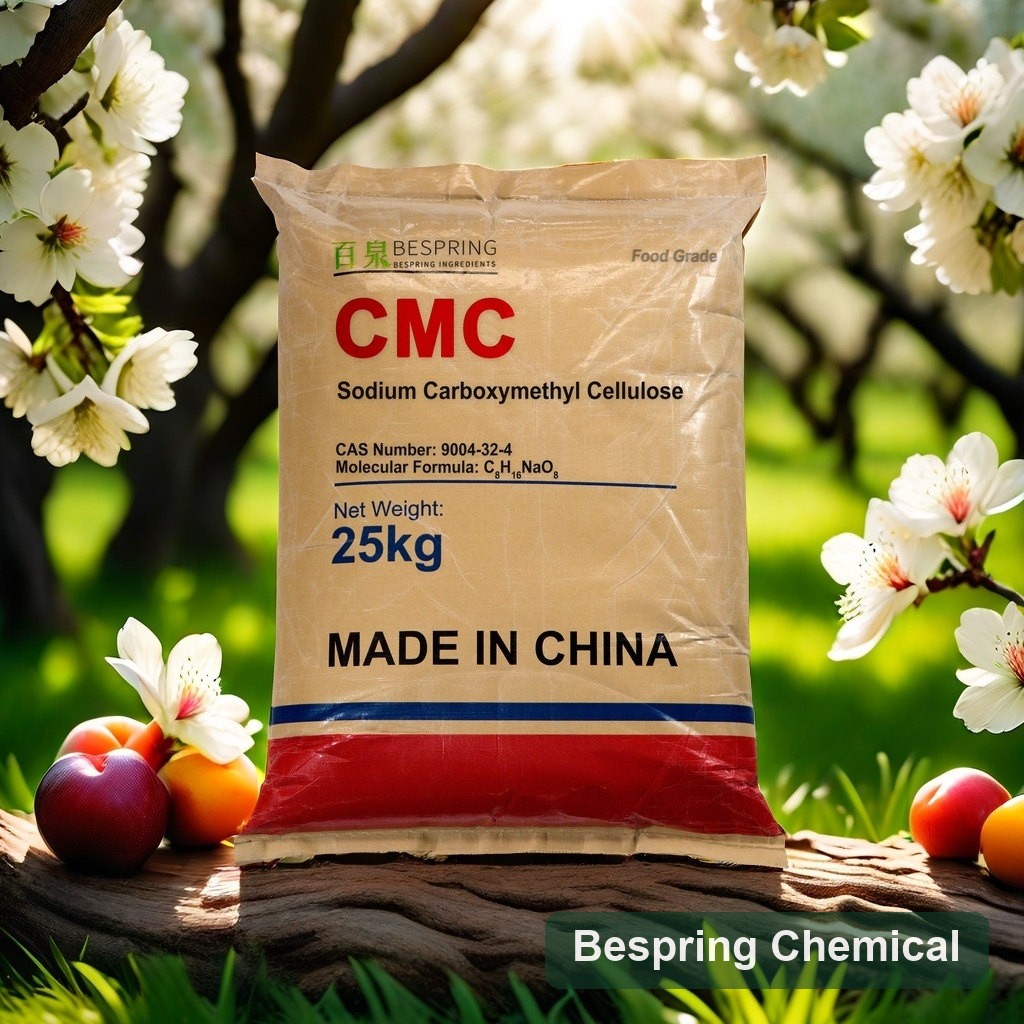
Sodium carboxymethyl cellulose CMC product bag
Representative packaging image. Label, bag style and packing configuration may vary by specification and order.
Multiple viscosity gradesMatch flow and texture objectives
Custom specificationsCustomer specification sheets accepted
Batch documentationRequest applicable specification and COA
Export coordinationPackaging and shipping support

Product overview

What is food grade sodium CMC?

Sodium carboxymethyl cellulose is the sodium salt of a carboxymethyl ether of cellulose. It is also known as sodium CMC, Na-CMC or cellulose gum. When dispersed and properly hydrated in water, it forms a viscous colloidal solution that can modify texture and improve physical stability.

Food grade CMC is commonly specified by purity, viscosity, degree of substitution, pH, moisture and particle size. Viscosity is not a single universal number: the test concentration, temperature, hydration procedure and instrument settings all affect the reported result.

Functional performance

What does CMC do in food formulations?

The selected grade, use level and process determine the final result. Formulation trials should confirm performance in the buyer's actual system.

Flow & texture

Viscosity control

CMC can increase aqueous-phase viscosity and help formulators create a more consistent body, pour and mouthfeel.

  • Low to high viscosity grades available
  • Performance depends on concentration and hydration
  • Test method must accompany the target range
Physical stability

Stabilization & suspension

In suitable systems, CMC helps slow particle settling, reduce phase separation and maintain a more uniform product structure.

  • Supports suspended solids and uniformity
  • Can improve water binding in selected foods
  • Compatibility should be checked in the full formula

Food and beverage uses

Common food grade CMC applications

These are application categories, not universal performance claims. The correct grade should be selected against the formulation, process and destination-market rules.

Beverages

Viscosity adjustment and suspension support in suitable juice drinks, flavored beverages, concentrates and powdered drink systems.

Ice cream & frozen desserts

Texture and physical-stability support in formulations that require controlled body and water management.

Dairy systems

Thickening and stabilization in selected dairy drinks, cultured products, desserts and processed formulations.

Sauces & dressings

Flow, cling and suspension control in sauces, condiments, fillings and savory preparations.

Bakery & fillings

Water binding and texture support in selected doughs, batters, creams, fillings and bakery systems.

Instant & prepared foods

Body and consistency in soups, seasoning systems, dry mixes and reconstituted food products.

Specification-led manufacturing

Need a specific CMC grade? Send us your specification.

CMC has many commercial specifications. Bespring accepts customized requirements: customers may provide a target specification sheet and analytical methods, and we will evaluate the requested parameters before confirming production of the designated grade.

Submit your requirements

Parameters commonly customized

  • 01ViscosityConcentration, temperature, instrument and target range
  • 02Degree of substitutionTarget DS range appropriate to the application
  • 03Purity & impuritiesAssay, sodium chloride, glycolate and agreed controls
  • 04Physical propertiesMesh size, moisture, bulk density and appearance
  • 05Packing & documentsBag, liner, pallet, labeling and destination requirements

Technical information

Food grade CMC reference specification

The values below summarize the FAO/JECFA monograph for sodium carboxymethyl cellulose and support initial evaluation only. Your contractual specification, agreed test methods and batch COA govern an order.

Assay≥ 99.5%Dried basis
pH6.0–8.51 in 100 solution
Loss on drying≤ 12%105°C to constant weight
DS range0.20–1.50JECFA reference range
Sodium carboxymethyl cellulose — public food additive reference
ParameterJECFA referencePurchasing note
DescriptionWhite or slightly yellowish, almost odourless hygroscopic granules, powder or fine fibresAgree appearance and particle profile
AssayNot less than 99.5% on the dried basisNot equivalent to detergent-grade purity
Loss on dryingNot more than 12%105°C to constant weight
pH6.0–8.51 in 100 solution
SodiumNot more than 12.4% on the dried basisConfirm analytical method
Sodium chlorideNot more than 0.5% on the dried basisImpurity control
Free glycolateNot more than 0.4% as sodium glycolate on the dried basisImpurity control
Degree of substitution0.20–1.50Narrower customer ranges can be reviewed
LeadNot more than 2 mg/kgDestination standards may add requirements
ViscositySpecified further by commercial gradeAlways state the complete test method

Reference and grade distinction

Source: FAO JECFA Monographs 11 — Sodium Carboxymethyl Cellulose. Food grade, detergent grade and other industrial grades are not interchangeable; each has its own purity, impurity, documentation and performance requirements.

Important: Food-additive approval, permitted uses, dosage and labeling are application- and market-specific. Buyers should complete regulatory and formulation review for the destination market.

Selection, dispersion & storage

Get reproducible performance from CMC

  • Define the viscosity methodState concentration, temperature, hydration time, spindle and speed; otherwise viscosity figures cannot be compared reliably.
  • Disperse before full hydrationUse appropriate agitation or preblend with compatible dry ingredients to reduce lump formation, then allow sufficient hydration.
  • Protect from moistureKeep packaging sealed and store in a cool, dry, well-ventilated place according to the applicable product documents.

Buyer questions

Food grade CMC FAQ

What is food grade CMC?

Food grade CMC is sodium carboxymethyl cellulose, also called cellulose gum or E466. It is a cellulose-derived ingredient used primarily as a thickener, stabilizer and suspension agent in food processing.

Can the viscosity and other CMC specifications be customized?

Yes. We can review requirements for viscosity, degree of substitution, purity, pH, moisture, particle size, bulk density and packaging. Send your specification and test methods so feasibility can be evaluated before the designated grade is confirmed for production.

How should I specify CMC viscosity?

State the solution concentration, test temperature, hydration procedure and time, viscometer model or spindle, rotational speed and target range. For example, a result measured at 1% solution cannot be compared directly with a 2% solution result.

Are food grade and detergent grade CMC interchangeable?

No. The grades may differ in purity, impurities, microbiological controls, documentation and functional targets. A detergent-grade specification should not be used to qualify material for food manufacturing.

How do I select the right CMC grade for my food?

Start with the application, target texture, process temperature, pH, salt or sugar content, other hydrocolloids and desired viscosity. Our team can use that information to recommend candidates for your own pilot and stability trials.

Can I request a sample and product documents?

Samples and applicable documents can be discussed for qualified projects. Include the grade or specification, application, test plan, destination and courier details in your inquiry.

What information is needed for an accurate quotation?

Provide your intended food application, required standard, full viscosity method and range, degree of substitution if relevant, particle size, quantity, packaging and destination. Attaching your own specification sheet is the fastest route to a useful quotation.

Custom grade inquiry

Request a food grade CMC quote

Tell us how your specification is measured—not only the target number. This helps us match the right CMC grade and avoid method-to-method differences.

  • Food application and required standard
  • Viscosity range and complete test method
  • DS, purity, moisture and particle size
  • Quantity, packaging and destination

By submitting this form, you agree that Bespring Chemical may use the information to respond to your inquiry. To send a specification attachment, email it to [email protected].