Controlled reaction
Supports delayed carbon-dioxide release compared with fast-acting leavening acids.

Leavening acid · INS 541(i) · SALP
Sodium aluminum phosphate (SALP) is an acidic, slow-acting leavening phosphate used with bicarbonate in baking powder, baked goods and fried-dough systems. Bespring supplies food grade white powder for industrial buyers.
*Formula corresponds to the supplied 15–16% loss-on-ignition specification. Include quantity, destination and application for an efficient review.
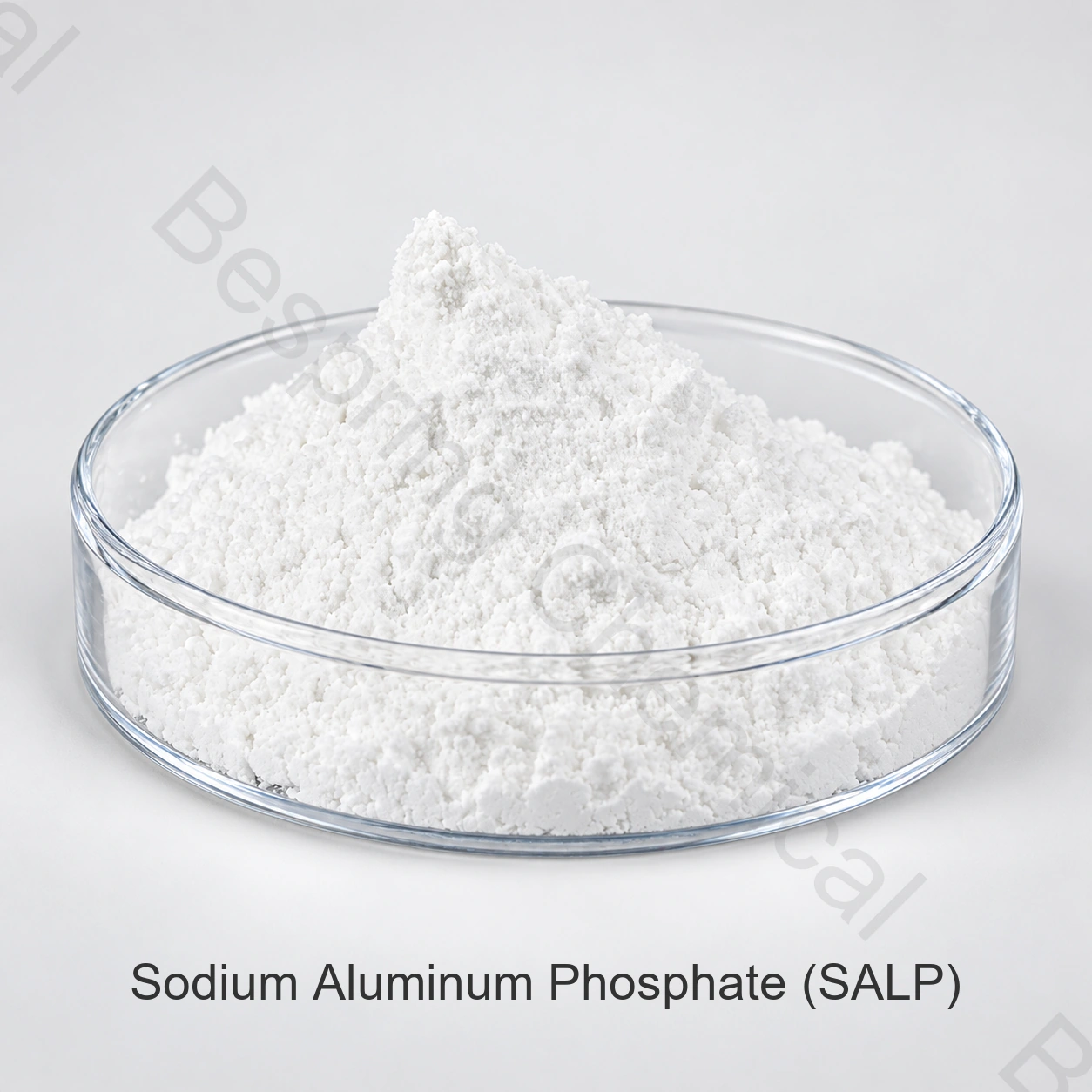
Product overview
Food grade sodium aluminum phosphate is an acidic sodium-aluminum phosphate and a slow-acting leavening acid. In baking systems it reacts with sodium bicarbonate to release carbon dioxide, helping doughs and batters expand during processing and heating.
SALP is identified as INS 541(i). Commercial SALP can be represented by more than one chemical composition; the formula shown on this page matches the supplied specification with 15–16% loss on ignition. Buyers should confirm formula, reaction profile, test methods and destination-market requirements before contracting.
Formulation value
SALP supplies controlled acidity for bicarbonate-based leavening. Actual performance depends on neutralizing value, particle characteristics, the complete formula, mixing, moisture, temperature and process time.
Supports delayed carbon-dioxide release compared with fast-acting leavening acids.
Contributes acid for bicarbonate reaction and expansion in validated dough and batter systems.
Helps manufacturers manage cell structure and finished-product consistency through controlled leavening.
Useful where the leavening profile must accommodate mixing, holding, forming or thermal processing.
Typical application areas
The intended food category, dosage and declaration must be reviewed against the regulations of the manufacturing and destination markets.
SALP is used as the acidic component of selected chemical leavening systems for commercial baking and dry premixes.
In validated formulations, slow-acting SALP helps coordinate gas release with forming and frying conditions.
Product specification
The following limits are reproduced from the supplied product data sheet. They are for product evaluation and reference; the agreed specification and batch COA govern an order.
| Test item | Specification | Expression |
|---|---|---|
| SALP assay (Na3Al2H15(PO4)8) | ≥ 95.0% | Supplied specification |
| Arsenic (As) | ≤ 0.0005% | ≤ 5 mg/kg |
| Heavy metals (as Pb) | ≤ 0.001% | ≤ 10 mg/kg |
| Lead (Pb) | ≤ 0.0002% | ≤ 2 mg/kg |
| pH (1% suspension) | 2–3 | Acidic |
| Loss on ignition | 15–16% | Confirm method on specification |
| Appearance | White powder | Visual |
Data-sheet notice: Results may differ because of variations in test conditions, equipment and methods. Confirm methods, sampling rules and acceptance criteria before contracting.
Packing & logistics
The supplied sheet gives a reference load of 24 MT per 20-foot container. Final loading depends on route, container limits, pallets and local requirements.
Storage & shelf life
Buyer questions
Acidic SALP is a slow-acting leavening acid used with bicarbonate in baking powder, baked goods and fried-dough formulations. The precise use level depends on neutralizing value, the complete recipe, process and local regulations.
Acidic sodium aluminum phosphate is identified by Codex INS number 541(i). Market-specific names, labeling and permitted applications can differ, so the buyer should verify destination-market requirements.
No. This page presents the supplied reference limits. A certificate of analysis reports results for a particular batch and should be checked against the agreed purchase specification.
The supplied commercial specification states 25 kg per bag and reference loading of 24 MT per 20-foot container. Final loading depends on route, container limits and pallet requirements.
Provide the required food standard, quantity, packaging, destination port, baking or fried-dough application, current leavening system and delivery target.
Ask the sales team for the specification, TDS, SDS and current HACCP, Kosher, Halal or ISO-related documentation applicable to the supply. State your application and destination so certificate scope, validity and sample availability can be reviewed.
Start a sourcing conversation
Share the commercial and formulation details that affect grade confirmation, container loading and landed cost.