Food MCP monohydrate
CAS 10031-30-8
Primary intent: food-grade identity, fast leavening evaluation and the supplied monohydrate-aligned calcium specification.

Food leavening phosphate · E341(i) / INS 341(i)
Source calcium dihydrogen phosphate monohydrate for qualified bakery leavening, dough systems and food formulations. Specify CAS 10031-30-8, neutralizing value, reaction profile and particle requirements—not “MCP” alone.
*Commercial source reference; the signed source specification and methods must be reconfirmed.
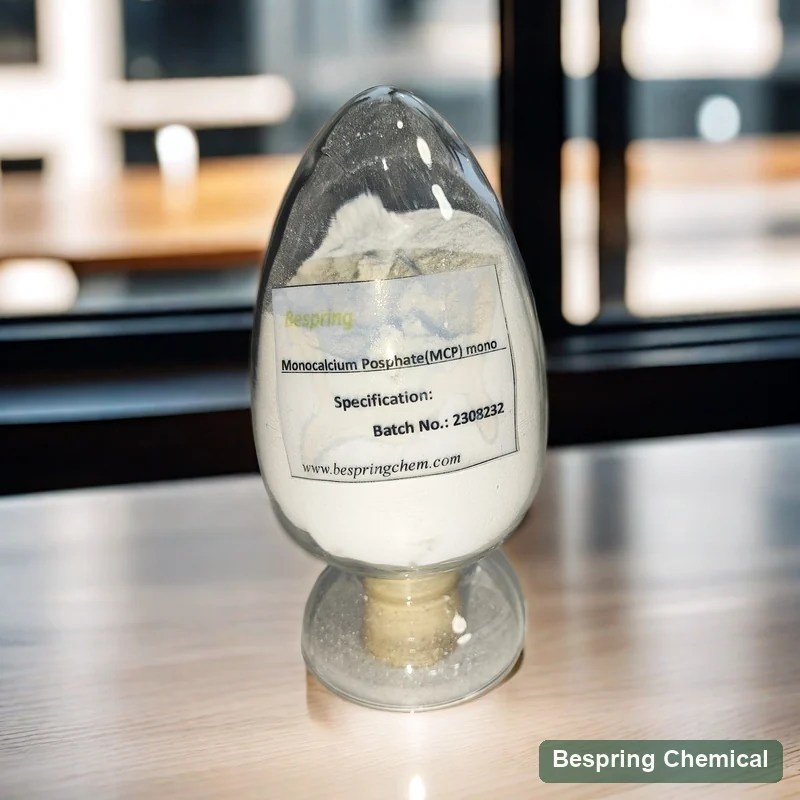
Product identity
Monocalcium phosphate monohydrate (MCP or MCPM), standardized as calcium dihydrogen phosphate, is the hydrated acidic calcium phosphate Ca(H2PO4)2·H2O. JECFA identifies the monohydrate as CAS 10031-30-8 under INS 341(i).
JECFA lists buffering, firming, sequestrant, leavening, dough-conditioning, texturizing, yeast-food and nutrient functions. In chemical leavening, water brings MCP and bicarbonate into reaction, releasing carbon dioxide; production success depends on the exact neutralizing and gas-release profile.
Prevent grade and URL confusion
The abbreviation is shared across different hydration forms, coated leavening grades and animal-nutrition products. Formula alone does not qualify food use or predict reaction timing.
CAS 10031-30-8
Primary intent: food-grade identity, fast leavening evaluation and the supplied monohydrate-aligned calcium specification.
CAS 7758-23-8
Anhydrous chemistry is separate. A slow-acting AMCP is commonly a specially coated/treated grade; “anhydrous” alone does not prove slow reaction.
Animal nutrition intent
Feed phosphorus/calcium, digestibility, fluorine, particle and registration requirements do not qualify material for food processing.
Receiving control: purchase description, label, lot, specification and COA must all identify the same hydration form and food-grade source. Do not release material using an agricultural or feed certificate.
Bakery performance—not a commodity assay alone
Neutralizing value (NV) expresses the mass of sodium bicarbonate neutralized by 100 parts of leavening acid. An industry reference commonly gives MCP monohydrate NV around 80, but the contractual value and method must come from the exact offered grade.
Use the certified NV to calculate a starting ratio. Then adjust only after measuring finished-product pH, taste, color and residual alkalinity/acidity.
Uncoated MCP monohydrate is generally screened as a fast-acting acid. Track gas loss during mixing, transfer and bench hold before the structure sets.
Where oven-stage gas is needed, MCP can be evaluated with a slower leavening acid. Calculate each acid from its own NV and confirm total reaction by bake testing.
Particle size, coating/treatment, moisture, temperature, water availability, batter viscosity and ingredient order can shift the apparent reaction profile.
Application-specific screening
These are technical screening paths, not universal permissions or guaranteed outcomes.
Set NV, gas-release split, particle compatibility, segregation, humidity protection and shelf reaction. Test after the intended packaging and storage period.
Evaluate early aeration, bench time, specific volume, cell structure, symmetry, crumb, color, pH and flavor under the actual mix and bake curve.
Measure spread, surface, color, texture and residual taste. Reaction balance can affect browning and dough handling as well as lift.
Where used for nutrient, buffering or firming functions, calculate calcium and phosphorus from certified composition and test solubility, sensory and complete-formula labeling.
Commercial sheet under technical audit
The source table contained OCR errors and mixed or undefined methods. It is shown transparently for qualification, not as a claim of JECFA conformity or a signed sales specification.
| Field | Supplied / normalized value | Audit decision |
|---|---|---|
| Appearance | White crystalline powder or flake crystals | Does not mirror JECFA “crystals, granules or granular powder”; confirm exact grade |
| Calcium (as Ca) | 15.9–17.7% | Matches JECFA monohydrate assay; supports monohydrate—not anhydrous—identity |
| P2O5 | 50.0–52.5% (normalized from OCR “P₄O₆”) | Basis and method unresolved; verify against signed original before use |
| CaO | 19.0–24.8% | Broad range is not consistently derived from the stated Ca range; clarify reporting basis |
| Identification | Positive | Require separate calcium and phosphate methods |
| Arsenic | ≤0.0003% (=3 mg/kg) | Matches JECFA maximum numerically |
| Fluoride | ≤0.0001% (=1 mg/kg) | Much tighter than JECFA 50 mg/kg; likely needs OCR/unit verification |
| Heavy metals (as Pb) | ≤0.0015% (=15 mg/kg) | Legacy aggregate parameter; not a replacement for named elements |
| Lead | ≤0.0005% (=5 mg/kg) | Does not meet JECFA maximum of 4 mg/kg |
| Cadmium / mercury | Each ≤0.0001% (=1 mg/kg) | Commercial fields; confirm destination limits and methods |
| “Loss on ignition” | ≤1.0% | Method label conflicts with JECFA: monohydrate LOD ≤1% at 60°C/3 h; anhydrous LOI 14.0–15.5% at 800°C/30 min |
| “Loss on heating” | ≤17.0% | Method and hydration interpretation unresolved |
| Clarity / carbonate / dissociable salts | Pass | Provide sample preparation, endpoint and source standard |
Lead exceeds the JECFA reference, the loss tests conflict, and key identity/purity methods are missing. Obtain the signed original and a source-specific offer meeting the selected standard before approval.
Monohydrate: Ca 15.9–17.7%, LOD ≤1% at 60°C for 3 h; both forms: fluoride ≤50, arsenic ≤3 and lead ≤4 mg/kg, plus identity tests.
Review the JECFA MCP monographRequest NV with method, reaction-rate profile, particle distribution, bulk density, moisture behavior, slurry pH, insolubles, microbiology where required, shelf life and coated/uncoated status.
Bench-to-line approval
Require food-grade monohydrate, CAS 10031-30-8, source standard, label, signed specification and lot traceability.
Calculate the starting bicarbonate ratio from the offered grade, while accounting for other formula acids and alkaline ingredients.
Use matched water, temperature, mixer and hold time to track early and total gas release—not only final assay.
Compare volume, cells, symmetry, spread, color, pH, texture and taste against the approved benchmark.
Test humidity, packaging, storage time, segregation and premature acid–bicarbonate reaction.
Agree identity, Ca assay, impurities, NV/reaction, particle distribution and COA fields with methods and change control.
Storage and handling
Appearance and handling references
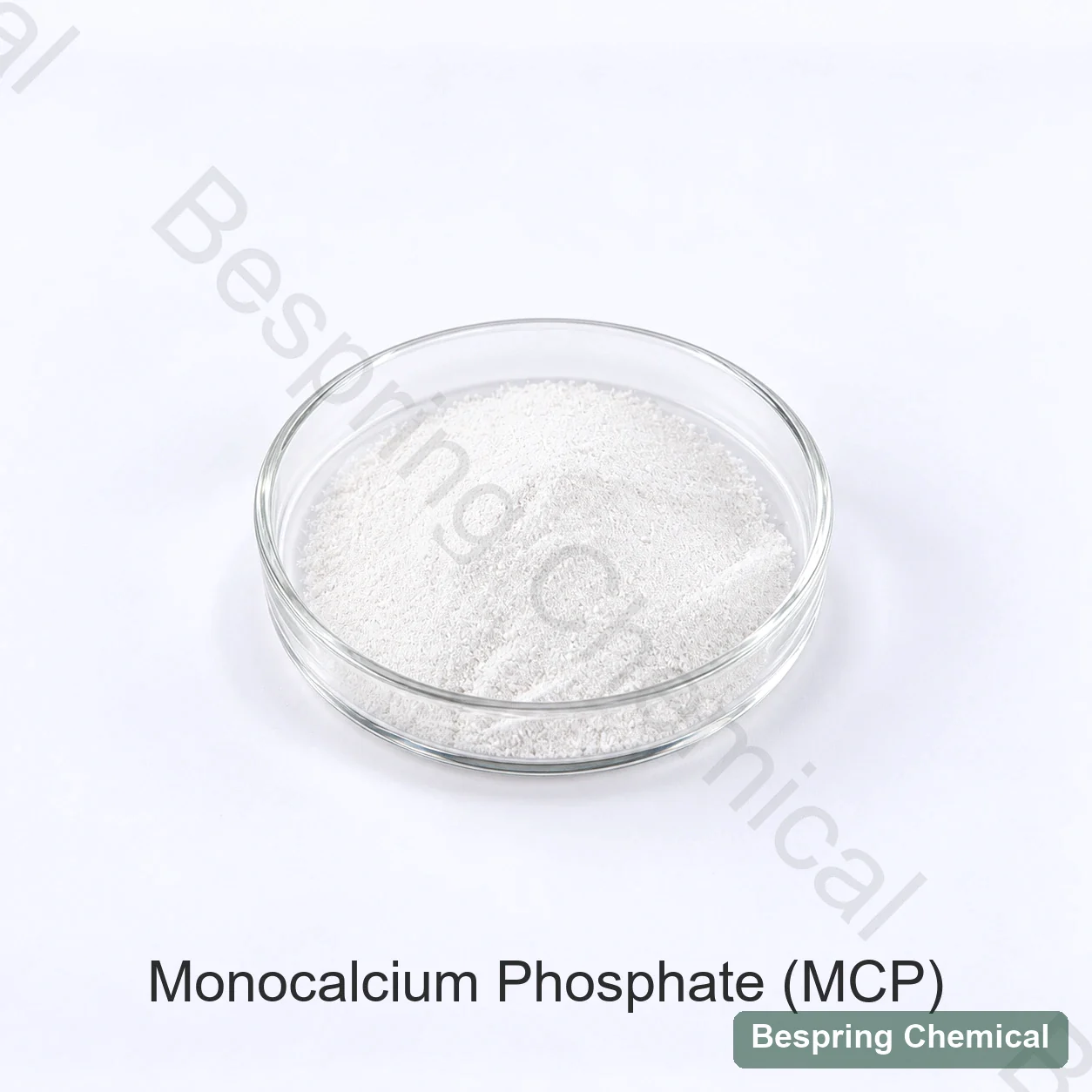
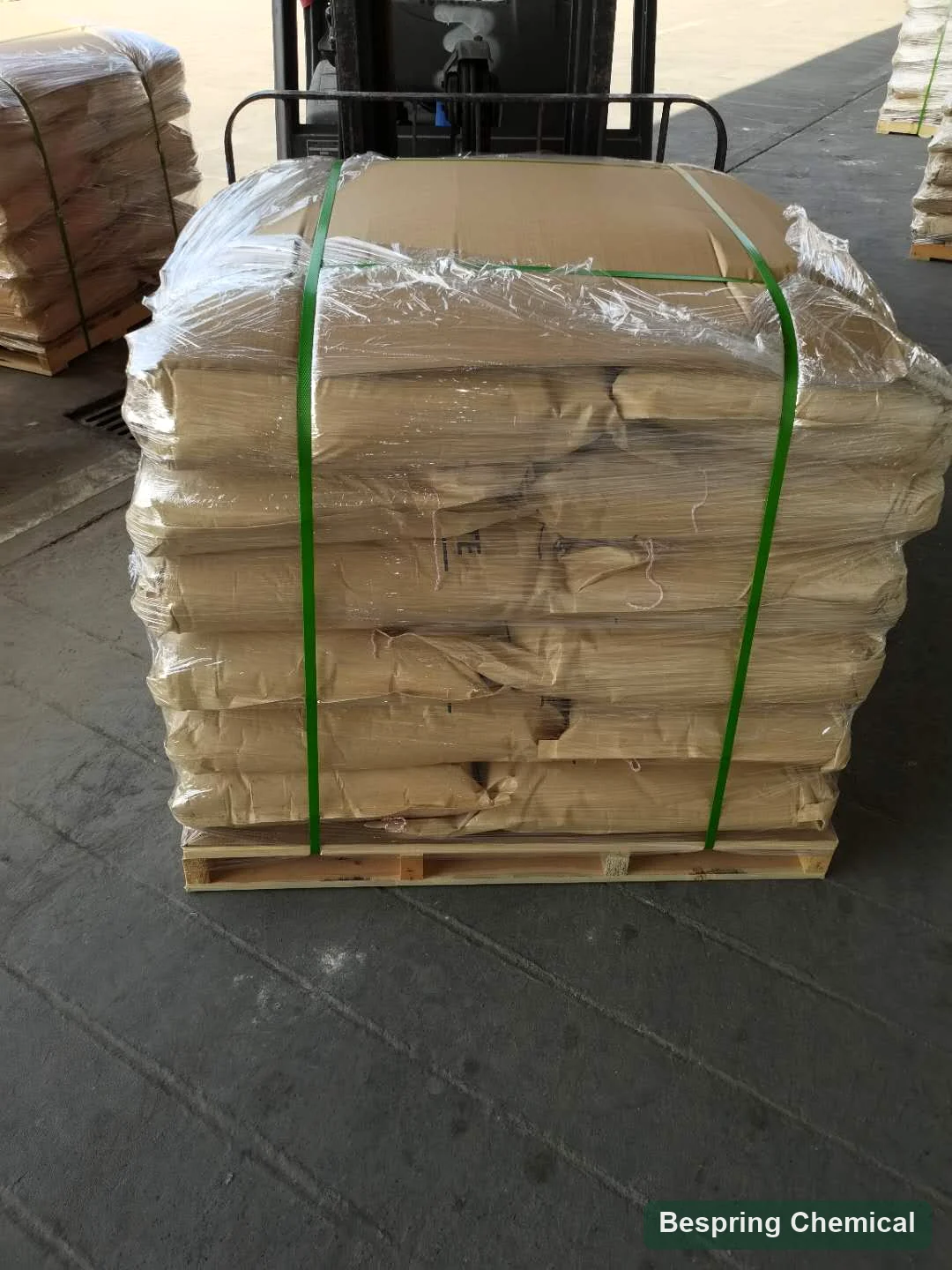
Buyer questions
This URL now primarily covers food grade monocalcium phosphate monohydrate, CAS 10031-30-8. Bespring has a separate page for anhydrous MCP, CAS 7758-23-8, to prevent hydration-form and search-intent confusion.
Uncoated MCP monohydrate is generally screened as fast acting, but the actual profile depends on grade, particle size, treatment/coating, moisture and process. Commercial coated anhydrous MCP can be designed for slower release, so request reaction data.
NV is the parts by mass of sodium bicarbonate neutralized by 100 parts of leavening acid. An industry reference commonly lists about 80 for MCP monohydrate, but purchasing and formulation must use the certified value for the offered grade.
Not as written. The supplied lead limit is 5 mg/kg versus JECFA's 4 mg/kg maximum, loss-test labels conflict and several methods are undefined. A corrected source-specific specification is required.
State food-grade monohydrate, CAS 10031-30-8, target standard, NV and reaction profile, particle size, bakery application and process, quantity, 25 kg packing/pallet needs, destination, Incoterm and certificates.
Substantive content review: 2026-08-22 · Independent identity/specification reference: FAO/WHO JECFA · Leavening reference: American Society of Baking.
Related grade and system pages
Use the separate CAS 7758-23-8 page for anhydrous or coated AMCP requirements.
Compare MCP, SAPP and SALP by NV, reaction timing, hold time and bake results.
Compare available SAPP reaction-rate grades for delayed or blended gas release.
Evaluate a slower heat-responsive leavening route where appropriate.
Compare a different calcium phosphate identity and function; DCP is not a leavening substitute.
Use the animal-nutrition page for feed phosphorus, calcium and registration intent.
Identity- and performance-led sourcing
Include the exact identity and leavening method so the offer is not confused with anhydrous or feed-grade MCP.