Concentration and analytical basis
State the required lactic acid concentration and test basis. Compare delivered acid content, not only the price per kilogram of solution.

Food grade ingredient · Acidity regulator · LA
Lactic acid is an organic acid used as an acidity regulator in permitted food applications. Commercial food grades can differ in concentration, fermentation or synthetic origin, stereochemical profile, color and heat stability, so the exact grade must be qualified.
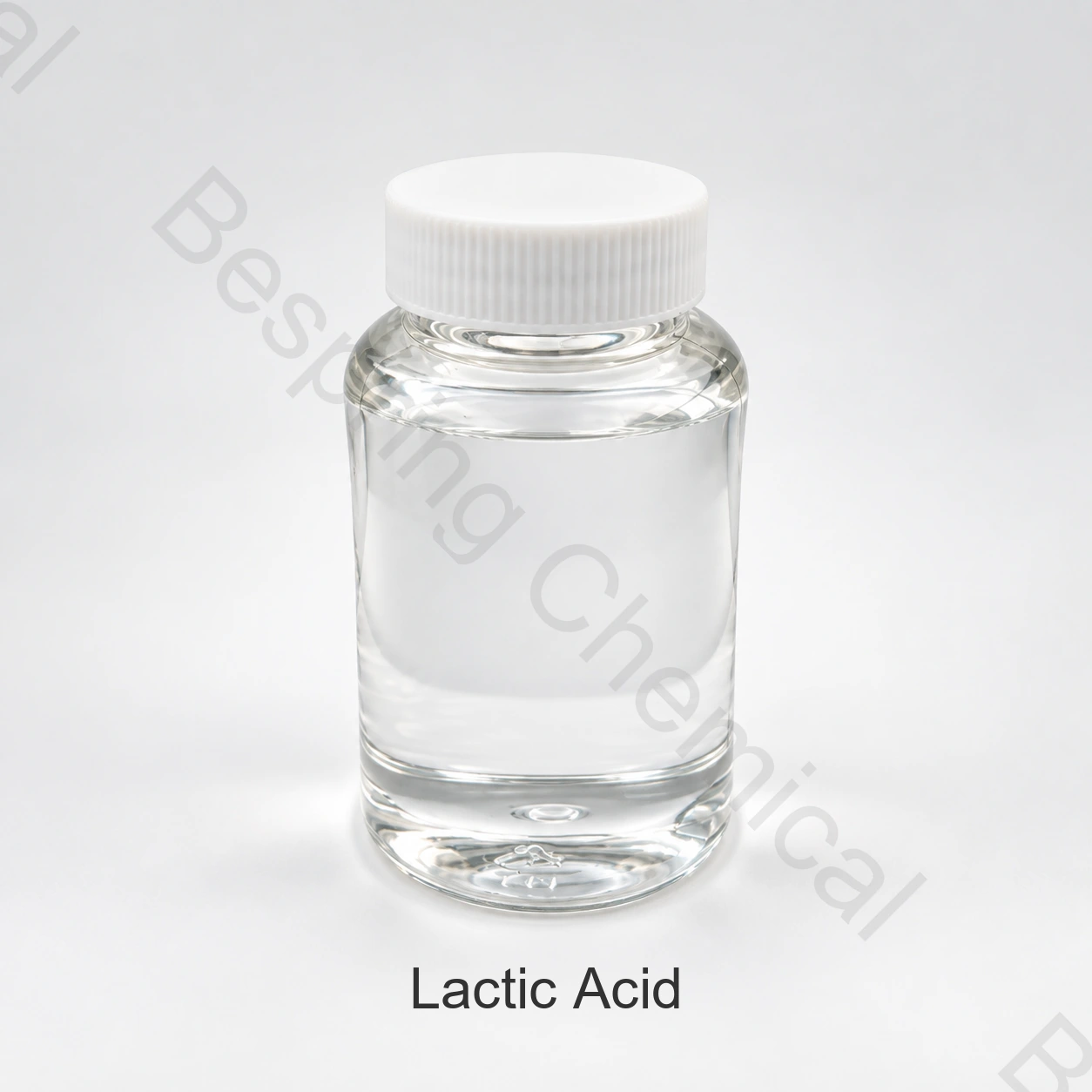
Product image · confirm grade and packaging when ordering
Share the exact grade, application, quantity, packing, destination and required documents.
GradeFood grade, subject to exact-source qualification
SpecificationCurrent document available from sales
PackingConfirmed in the source-specific offer
Batch evidenceCurrent COA available for supplied lots
Direct product answer
Lactic acid is an organic acid used as an acidity regulator in permitted food applications. Commercial food grades can differ in concentration, fermentation or synthetic origin, stereochemical profile, color and heat stability, so the exact grade must be qualified.
Commercial suitability depends on the exact source, intended function, full food process and destination-market rules. This page supports preliminary qualification; the current signed specification and batch COA supplied by sales govern the order.
Procurement checklist
Compare the offered grade, application requirements and commercial terms before requesting a sample or placing an order.
State the required lactic acid concentration and test basis. Compare delivered acid content, not only the price per kilogram of solution.
Use INS 270 alongside the exact chemical form and current specification. The additive number identifies the ingredient; it does not establish every permitted use.
Provide target pH, buffering load, flavor requirement and heat process. Evaluate the actual formulation before choosing a concentration or inclusion.
Specify L-, D- or DL-profile and any origin requirements. Obtain the corresponding source declarations instead of assuming that all commercial lactic acid has the same profile.
Application screening
These are formulation screening areas, not universal approvals, dosage recommendations or guaranteed outcomes. Confirm legal use and technical performance in the finished food.
Adjust acidity in suitable beverages, sauces, confectionery and processed foods.
Evaluate its mild acid character against citric, malic, acetic or phosphoric systems.
Use pH control as part of a validated hurdle system, not as a stand-alone shelf-life promise.
Screen concentration, color and thermal behavior in the actual manufacturing process.
Technical selection
Commercial solutions vary; state the required assay basis and do not compare price per kilogram alone.
Confirm L-, D- or DL-profile where formulation, nutrition or regulation makes it relevant.
Specify fermentation-derived or other origin requirements and supporting declarations.
Review storage temperature, compatible wetted materials and safe dilution instructions in the SDS.
Private technical documentation
Bespring Chemical does not publish product specifications for this ingredient online. Contact the sales team for the current source-specific specification or TDS and confirm that its revision, test methods and acceptance criteria match your purchase requirements.
Request the current signed specification or TDS, SDS, analytical methods, representative COA and batch COA.
Verify applicable food-safety, quality, origin, allergen, Kosher, Halal and site certificates for the exact grade and source.
Review the FAO/WHO JECFA lactic acid monograph, then apply current destination-market rules to the exact finished food.
Compliance note: International identity references do not by themselves authorize every application. The buyer is responsible for confirming the food category, use level, label declaration and other requirements in each destination market.
Storage and handling
Buyer questions
INS 270 identifies lactic acid, an acidity regulator used in permitted food applications. E270 is the corresponding European additive designation. Confirm the exact grade and the rules for the intended finished food.
No. Lactic acid and its sodium salt are different ingredients. They have different composition and formulation roles, so compare them against the required acidity, sodium contribution and finished-food performance.
Different solution concentrations deliver different amounts of acid per kilogram. Agree the concentration and analytical basis, then compare dilution, dosing, handling and delivered cost.
Confirm the stereochemical profile and matching chemical identity on the current specification. Do not assume an L-only grade from the generic name or CAS listing.
Provide concentration, stereochemical and origin requirements, food application, target pH, process conditions, quantity, packing, destination and documents. Request a current specification and representative COA.
Content updated 2026-09-13.
Related sourcing
Browse the full portfolio and available technical product dossiers.
Discuss a private specification, documents, sample and commercial requirements.
Review sourcing and export support for international ingredient procurement.
Related application guidance: Sodium lactate · Potassium lactate · Beverage acids and buffers.
Specification-led sourcing
Share the exact grade or type, application, critical performance requirements, quantity, packing, destination and document list for a relevant proposal.
Tell us your grade and destination market so we can confirm which documents are available for your order.
An external reference is not a batch certificate or a Bespring product specification.