Bespring supplies food grade citric acid anhydrous and monohydrate (E330/INS 330) for qualified food and beverage applications. Compare the two forms, review reference purchasing data and prepare a specification-led inquiry.
Include your form, quantity, destination and required standard for a faster technical response.
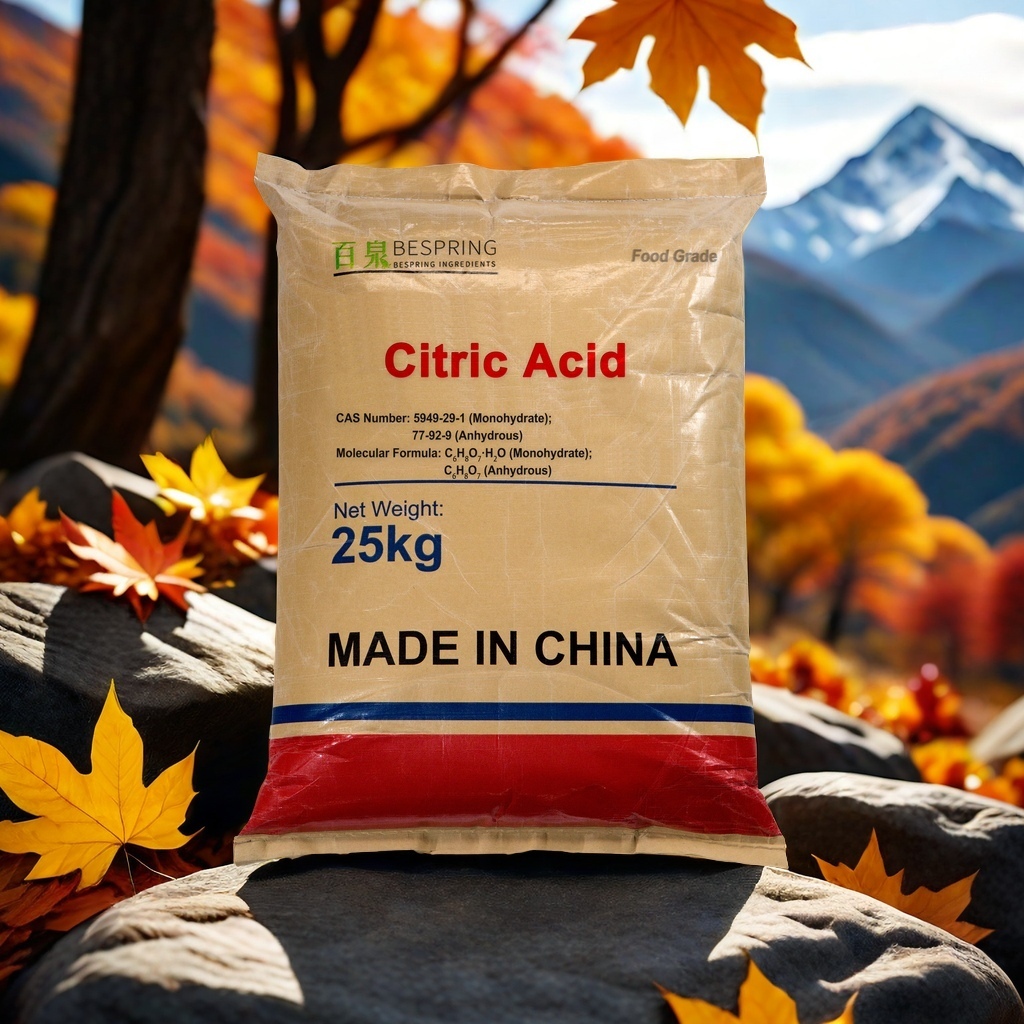
Food grade citric acid in Bespring 25 kg packaging.
Batch documentationCOA and product documents on request
Export packingDiscuss bag and pallet requirements
Inspection supportThird-party inspection can be arranged
Global coordinationDestination-specific export support
Product overview
What is food grade citric acid?
Food grade citric acid is a water-soluble organic acid used in food and beverage manufacturing as an acidity regulator and flavor modifier. In procurement, buyers normally specify the required form, applicable standard, particle profile, packaging and destination-market documentation.
Its value is practical: it provides predictable sourness, helps adjust product pH and supports a wide range of dry and liquid formulations. Suitability and dosage should always be confirmed by the buyer's formulation and regulatory teams.
Choose the right form
Anhydrous vs. monohydrate citric acid
The two forms have the same core function but differ in crystal water content and handling behavior. Confirm the best option through formulation trials and your technical specification.
Form 01
Citric acid anhydrous
Contains no water of crystallization. Commonly considered for dry blends, powdered beverages and processes where added moisture needs to be minimized.
Suited to many low-moisture formulations
Available in different particle profiles
Specify mesh or granulation when relevant
Form 02
Citric acid monohydrate
Contains one molecule of water in the crystal structure. Often selected for food and beverage processes based on dissolution, process and commercial requirements.
Established option for food processing
Formulation calculations should account for form
Confirm storage conditions and specification
Food and beverage uses
Common citric acid applications
Application suitability depends on recipe, process, local regulations and the finished product's target pH and sensory profile.
Beverages
Acidity adjustment and a bright tart profile in soft drinks, juice beverages, drink powders and concentrates.
Confectionery
Sourness and flavor balance in hard candy, gummies, jellies and powdered coatings.
Preserves & sauces
pH adjustment and flavor support in jams, fruit preparations, sauces and selected canned products.
Dairy & frozen desserts
Controlled acidification and flavor balance in suitable dairy, cultured and frozen formulations.
Bakery
Acid component in selected leavening systems and flavor adjustment in fillings and finished products.
Dry blends
Consistent acidity in seasonings, instant mixes, powdered beverages and functional ingredient blends.
Technical information
Reference purchasing specification
This summary is for initial product evaluation, not a certificate of analysis. Exact limits vary by form, grade and agreed standard; request the current specification before ordering.
Food grade citric acid — reference product data
Parameter
Reference information
Buyer note
Product forms
Anhydrous / monohydrate
State the required form in your inquiry
Assay
≥ 99.5% (reference)
Confirm method and contractual range
Appearance
White crystalline powder or granules
Granulation options may vary
Food additive designation
E330
Check requirements in the destination market
Packaging
25 kg bag; other options by discussion
Confirm liner, pallet and labeling needs
Documentation
COA / TDS / SDS on request
Specify the grade and destination country
Important: Regulatory approval, legal dosage and label declarations are determined by the application and destination market. Buyers should complete their own compliance and formulation review.
Identity cross-check from primary sources
The current FAO/WHO JECFA monograph identifies citric acid as INS 330, with CAS 77-92-9 for anhydrous and 5949-29-1 for monohydrate. It specifies 99.5–100.5% assay on the anhydrous basis and lists acidifier, sequestrant, antioxidant synergist and flavouring-agent functions. The U.S. FDA food-substance inventory independently lists citric acid under CAS 77-92-9. These sources verify identity and reference criteria; they do not replace an agreed supply specification or destination-market review.
What to confirm before buying food grade citric acid
The form, standard and analytical basis affect whether two apparently similar quotations are technically comparable.
01
Form & identity
State anhydrous or monohydrate, the corresponding CAS number, E330/INS 330 designation and intended application.
02
Standard & test methods
Identify the required food standard and align assay basis, water, impurities, particle profile, sampling and analytical methods.
03
Process fit
Share the target pH, sensory objective, dry or liquid process, dissolution needs and any moisture-sensitive handling constraints.
04
Documents & delivery
Confirm the current specification, batch COA and applicable supporting documents together with bag, pallets, quantity and destination.
Commercial comparison: Do not compare offers on “citric acid” and price alone. Normalize the form, assay basis, standard, granulation, packaging, documentation scope and delivered quantity first.
Packing & export handling
Packaging and container-loading reference
Packaging, pallets and cargo weight are confirmed against the selected citric acid form, destination and shipment plan before dispatch.
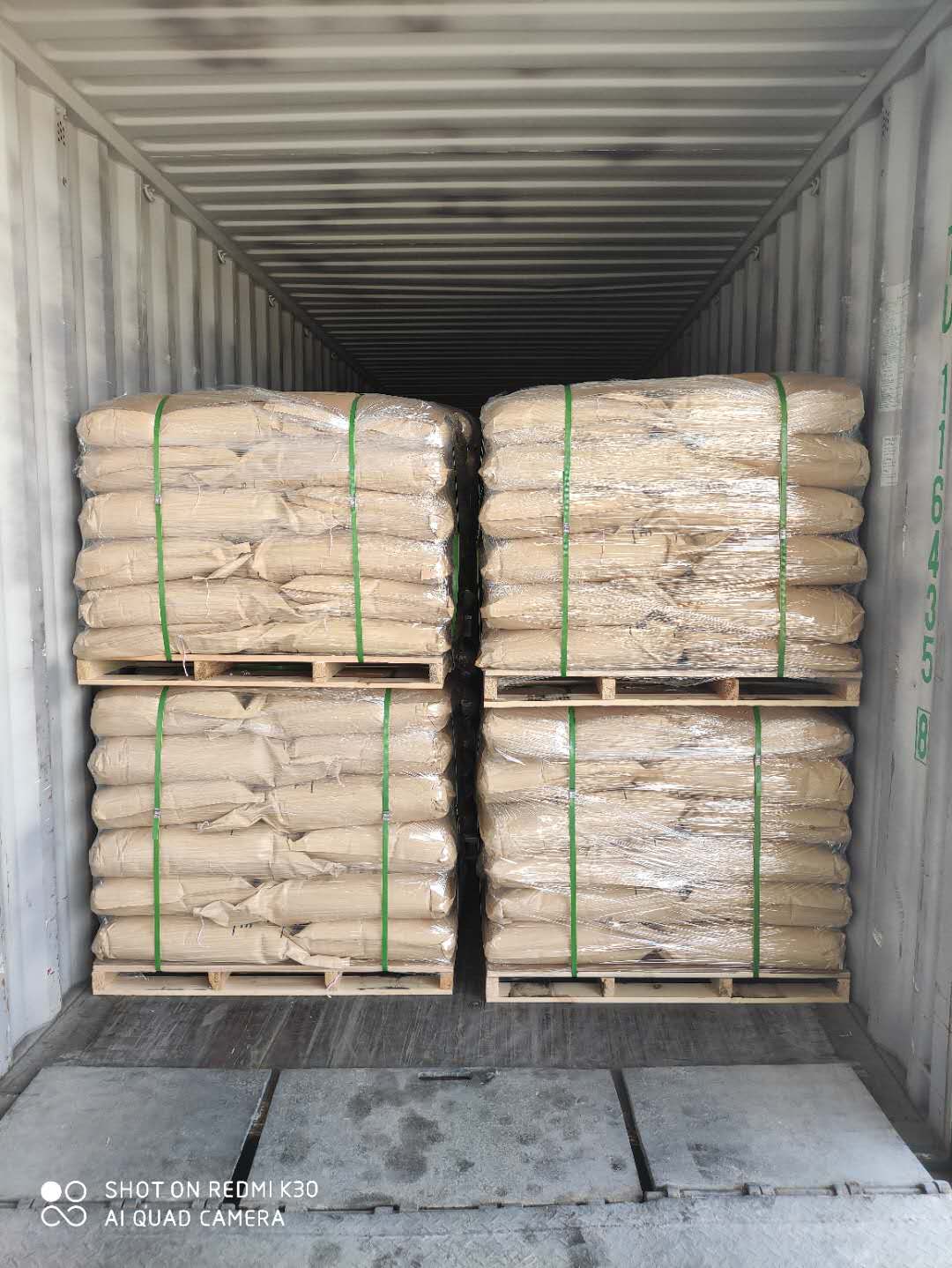
Palletized bags staged in a container for export loading.
Confirm the shipment details before loading
The standard reference pack is a 25 kg bag. Confirm the required citric acid form, bag liner, pallet preference, labeling, destination port and shipment timing as part of the order review.
Bag and linerMatch the packaging arrangement to the selected form and destination requirements.
Pallet planConfirm pallet dimensions, wrapping and loading pattern before shipment.
Container planningFinal cargo weight and loading arrangement depend on the route, container and approved shipment plan.
Storage & handling
Protect product quality after delivery
Store correctlyKeep in a cool, dry and well-ventilated place.
Keep sealedProtect opened packaging from moisture and contamination.
Follow the SDSUse workplace controls and protective equipment appropriate to the task.
Related selection resources
Compare acidulants, citrate salts and applications
Continue from product identity to adjacent ingredient choices and application-level qualification.
It is commonly used to adjust acidity, add a clean tart taste, support flavor profiles and assist formulation stability in beverages, confectionery, dairy products, preserves and other processed foods.
What is the difference between anhydrous and monohydrate citric acid?
Anhydrous citric acid contains no water of crystallization, while monohydrate includes one water molecule in its crystal structure. The appropriate form depends on your formulation, process, storage and specification.
Can I request a sample before placing a bulk order?
Samples may be arranged for qualified projects. Tell us the required form, application, specification, destination and courier account so the team can confirm availability and shipping conditions.
Do anhydrous and monohydrate citric acid use the same CAS number?
No. JECFA identifies anhydrous citric acid as CAS 77-92-9 and citric acid monohydrate as CAS 5949-29-1. State the required form clearly in specifications, documents and quotations.
Can I request a COA, TDS or SDS?
Yes. Ask for the documents applicable to the grade, batch and destination market you are evaluating. A batch COA should be reviewed against your agreed purchase specification.
What information is needed for an accurate quotation?
Provide the required form, grade or standard, quantity, packaging, destination country or port, intended application and requested delivery date. This prevents an attractive but unusable quote—the chemical-trade equivalent of ordering shoes without a size.
Can third-party pre-shipment inspection be arranged?
Third-party inspection can be discussed before order confirmation. Include the required inspection scope, agency and reporting format in your inquiry because related timing and costs may affect the quotation.
Start a sourcing conversation
Request a citric acid quote
Share the details that affect product selection and landed cost. Our team can then respond with a relevant grade, documentation and commercial proposal.