Calcium Propionate E282
Standard food grade calcium propionate for permitted preservation applications. The reference specification and example test results supplied for this page appear below.
Best inquiry detail: required limits and market
Food preservative · Antimould · E282
Calcium propionate (E282 / INS 282) is a food preservative used to help control mould and rope spoilage in suitable bread and bakery systems. Compare the source-specific specification, qualification questions and shelf-life trial variables before requesting a quote.
Tell us whether you need standard E282, FCC or a blended product, plus your quantity, application and destination.
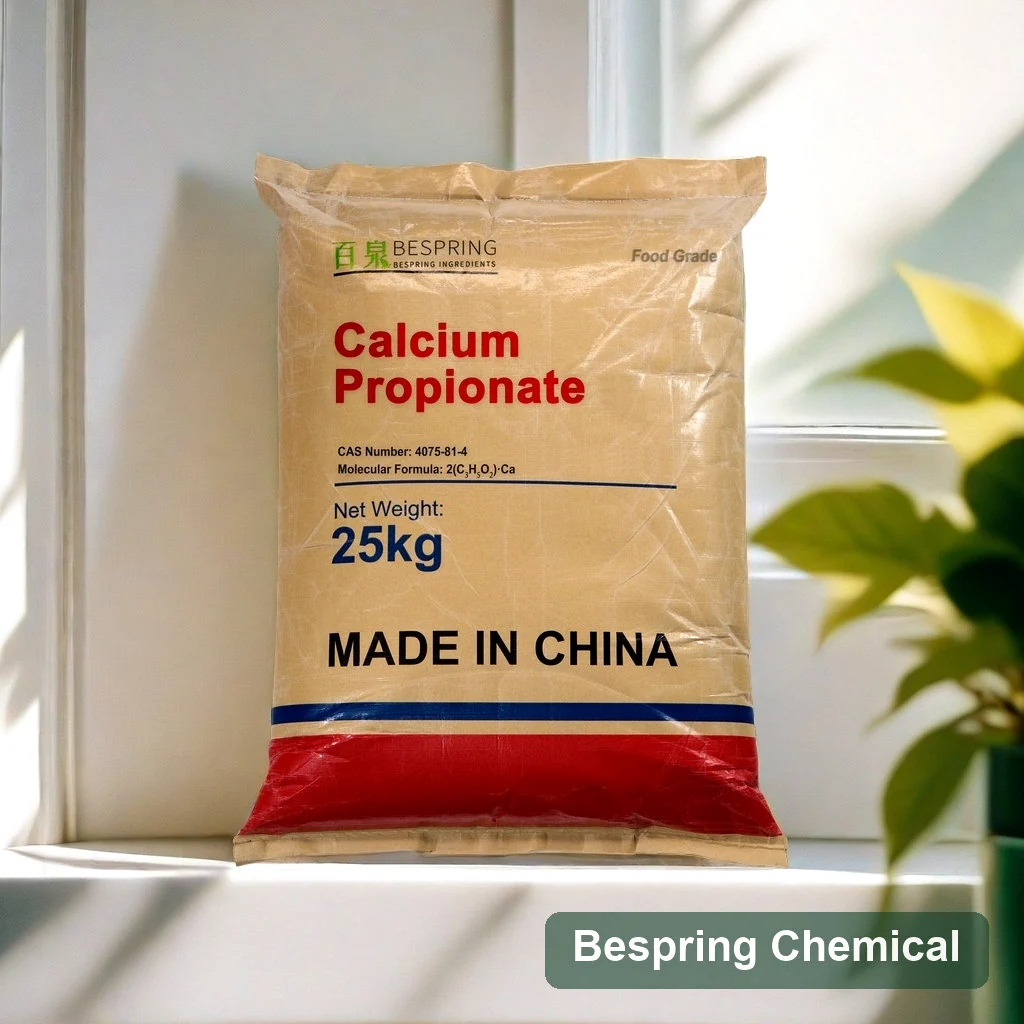
Product overview
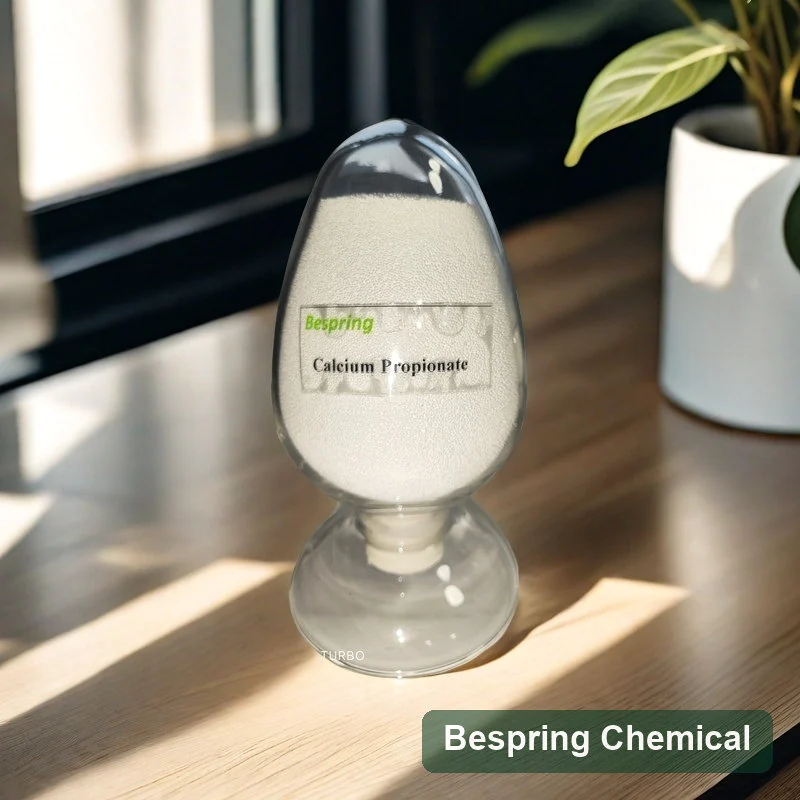
Calcium propionate, also called calcium propanoate, is the calcium salt of propionic acid. It is identified as E282 in the European food-additive numbering system and INS 282 in Codex references. Food grade material is typically supplied as white crystals, powder or granules with no more than a faint propionic-acid odour.
In suitable food systems, dissolved propionate helps inhibit mould and rope-forming microorganisms. Practical performance depends on product pH, water activity, process hygiene, dosage, ingredient distribution, packaging and the target organism. It is one part of a preservation system—not a substitute for sanitation, process control or shelf-life validation.
Match the product to your market
“Food grade” is not enough information for a precise quotation. State the required specification, destination market and application so sales can confirm the correct product and documentation.
FCC and blended calcium propionate options may use different specifications from the standard E282 table below. Contact sales with your application and acceptance criteria.
Preservation applications
Permitted categories and use levels vary by jurisdiction. The buyer is responsible for confirming local regulations, formulation suitability and label requirements.
Evaluate mould and rope control in the final recipe, package and intended distribution conditions—not only in an unpackaged laboratory sample.
Confirm compatibility with dough pH, yeast fermentation, proof time, loaf volume, flavour and the required shelf-life target.
Validate the preservative system against product moisture, water activity, process conditions and the finished packaging format.
Assess particle distribution, handling and dosage consistency when calcium propionate is supplied through a dry ingredient blend.
This page addresses food-grade sourcing with a bakery focus. Suitability, maximum use and labelling depend on the destination market and finished food; Bespring does not infer feed-grade approval or universal dosage from the E282 identity.
From ingredient to shelf life
A useful calcium propionate trial separates preservative performance from process and packaging effects. Define a control, document the variables below and assess repeat batches under realistic storage and distribution conditions.
Record dough and finished-product pH, moisture and water activity. These conditions influence the preservative system and microbial growth.
Monitor mixing, fermentation, proof time, bake profile, loaf volume and sensory effects rather than treating shelf life as the only result.
Control post-bake exposure, cooling time and contact surfaces. Recontamination can obscure the effect of a formulation change.
Use the intended package and challenge realistic storage temperature, transport time and opening conditions across repeat batches.
Use the calcium propionate for packaged bread application guide to structure preservative screening, package comparison and shelf-life validation.
Technical information
The specification limits and test results below reproduce the information supplied for this page. The results represent a sample or batch reference and are not a standing guarantee for future shipments. Contractual acceptance must use the approved specification and shipment COA.
| Test parameter | Unit | Specification | Example result |
|---|---|---|---|
| Assay | % | 99.0–100.5 | 99.51 |
| Water | % | ≤ 4.0 | 3.2 |
| pH of 10% aqueous solution at 25°C | — | 7.5–10.5 | 8.0 |
| Heavy metals (as Pb) | mg/kg | ≤ 10 | < 10 |
| Fluoride (F) | % | ≤ 0.003 | < 0.003 |
| Water-insoluble matter | % | ≤ 0.2 | 0.12 |
| Magnesium (as MgO) | % | ≤ 0.4 | < 0.4 |
The values above illustrate one supplied result set. They do not establish the limits for FCC material, blended products or future shipments. Approve the applicable specification first, then compare each shipment COA with that agreed document.
Specification note: The supplied “Pb²⁺ (Heavy metals)” item has been presented as “Heavy metals (as Pb)” for clarity. Confirm the analytical method and whether a separate lead limit is required by your customer standard or destination market.
These are different references and should not be treated as interchangeable. JECFA lists an assay of at least 98.0% on the dried basis, water-insoluble matter no more than 0.3%, fluoride no more than 30 mg/kg, lead no more than 5 mg/kg and iron no more than 50 mg/kg. The supplied table uses a tighter 99.0–100.5% assay range and 0.2% insoluble-matter limit, but reports “heavy metals (as Pb)” rather than a separate lead test and does not show iron. Ask which standard, analytical methods and contaminant limits apply to the offered lot.
See the FAO/WHO JECFA calcium propionate monograph, U.S. eCFR 21 §184.1221 and NIH PubChem compound record. Legal use must be checked for the destination market and finished food.
Technical content reviewed against the cited public references on 22 August 2026. Commercial specifications and regulations must be reconfirmed for the offered grade and destination market.
Supplier qualification
Name the standard, edition, assay basis and customer-specific limits instead of relying on “food grade” alone.
Confirm separate lead and other required contaminant tests, methods and reporting limits for the destination market.
Agree appearance, particle form and handling criteria that affect dry blending and distribution in the bakery process.
Request the current specification, representative COA, TDS and SDS for the exact standard or blend being evaluated.
Packaging and logistics references
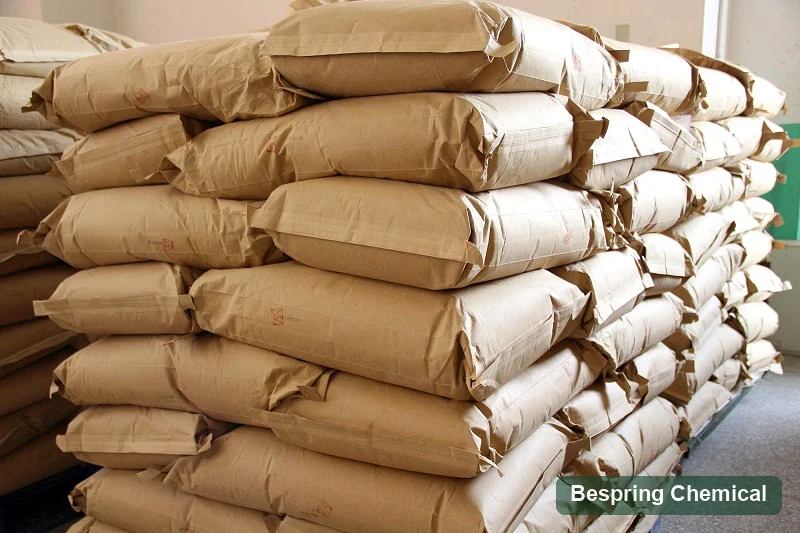
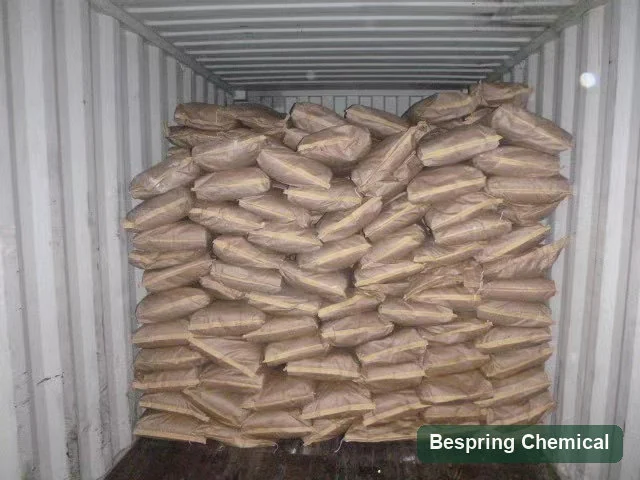
Storage & handling
Buyer questions
It is used as a preservative, antimould and antirope ingredient. It is especially associated with bread and baked goods, and may also be used in other food categories where destination-market regulations permit.
In a suitable formulation, propionate ions help inhibit mould and rope-forming microorganisms. Results depend on pH, moisture, dosage, process, distribution and the microbial challenge, so shelf-life trials remain essential.
E282 or INS 282 identifies calcium propionate as a food additive. FCC refers to a Food Chemicals Codex specification. State the required FCC edition, customer limits and destination market so sales can confirm the correct product and documents.
Yes. Blended calcium propionate is available for different customer and application needs. Contact sales with your formulation, process, dosing method, target shelf life and acceptance criteria so the appropriate composition can be discussed.
Yes. Request the documents applicable to the exact standard or blended product being evaluated. A shipment COA should be checked against the agreed purchase specification.
Provide the required grade or blend, specification, quantity, packaging, destination country or port, intended food application and target delivery date.
Continue your evaluation
Start a sourcing conversation
Share the technical and logistics details that determine product selection and landed cost. Sales can then respond with the relevant specification, documents and commercial proposal.