Pea protein isolate
A more highly purified protein fraction. Ask for protein on both as-is and dry basis, residual starch/fiber/fat, ash and the process used to obtain the isolate.

Pulse protein · Yellow pea · Application-selected grades
Pea protein is a pulse-derived food ingredient used for protein enrichment and functional performance. Specify isolate, concentrate, hydrolyzed or textured form—and compare protein method, hydration, flavor and process behavior before choosing a bulk grade.
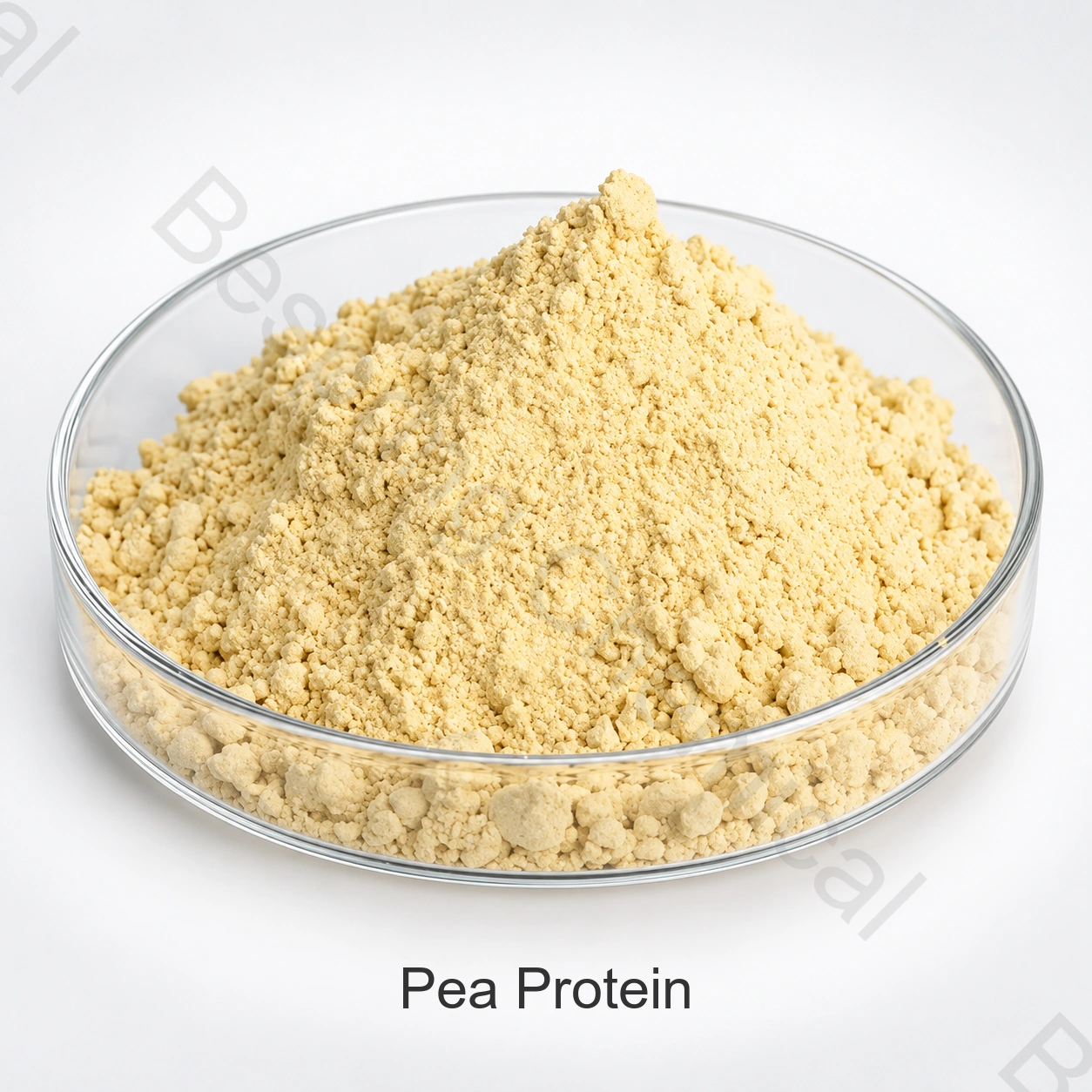
Product image · confirm grade and packaging when ordering
Share the application, target protein, process, sensory limits, quantity and destination.
Protein basis fixedMethod + conversion factor + moisture basis
Hydration measuredDispersion, solubility and sediment
Function matchedEmulsion, gel, foam or water binding
Sensory screenedColor, aroma, beany and bitter notes
Product identity
Pea protein is the protein-rich fraction obtained from peas after separating portions of starch, fiber and other components. Commercial ingredients differ with the raw pea, wet or dry fractionation, extraction pH, heat history, drying and any subsequent modification.
It is a food ingredient rather than a single chemical additive and has no universal CAS, INS number or composition. “Pea protein” therefore cannot serve as a complete product specification. Buyers must identify the grade, ingredient list, manufacturing route, protein basis and intended function.
Define the product before comparing it
Names and minimum protein thresholds are not globally interchangeable. Do not infer a grade from marketing terminology alone; use the offered specification and destination-market naming rules.
A more highly purified protein fraction. Ask for protein on both as-is and dry basis, residual starch/fiber/fat, ash and the process used to obtain the isolate.
Generally retains more non-protein pea components. Confirm actual composition and whether flavor, color, water binding or nutrition is the primary goal.
May be designed for dispersibility, solubility, emulsification, gelation or sensory performance. Declare processing aids and modification where required.
Hydrolysis changes solubility, viscosity and bitterness; extrusion creates structured pieces with separate hydration and texture specifications.
Application-led sourcing
A high protein assay alone does not establish suitability. Use the actual formula, water quality, pH, shear, heat process and storage conditions.
Measure wetting, dispersion, solubility, viscosity, sediment, heat stability, color and flavor at the target pH and protein load.
Evaluate instantization, dust, scoop density, reconstitution, foam, grit, flavor release and stability after package opening.
Test hydration, fat binding, emulsification, gel strength, extrusion response, bite, cooking loss and reheating stability.
Track dough water demand, machinability, volume, crumb or bite, browning, flavor and declared protein after processing.
Function and sensory are method-dependent
Record water temperature, pH, solids, mixing energy, hydration time and centrifugation or filtration method. “Soluble” without conditions is not comparable.
Distinguish capacity from stability and test the intended oil phase, ionic strength, homogenization and heat process.
Measure concentration, heat/cool cycle, shear, yield stress, gel strength, syneresis and cooking loss as applicable.
Use a defined panel and reference standard for beany, green, bitter or astringent notes; record masking and flavor interactions.
Supplier specification architecture
No source-specific numeric specification was available for this page. Unverified market limits are therefore not presented as Bespring guarantees.
Swipe or use the keyboard to read all columns
| Control | Request and compare | Decision impact |
|---|---|---|
| Identity | Pea species/variety, isolate/concentrate, ingredient list, process and country of origin | Defines what is being purchased and how it may be labelled |
| Protein | Method, nitrogen factor, as-is/dry basis, moisture and batch range | Controls nutrition calculation, cost and claim support |
| Composition | Fat, ash, carbohydrate, fiber and sodium as relevant | Affects flavor, label, hydration and formulation balance |
| Function | Application-specific solubility, viscosity, gel, emulsion, foam or water/oil holding methods | Predicts process fit only when test conditions are disclosed |
| Physical & sensory | Color method, particle distribution, bulk density, flavor profile and foreign matter | Affects handling, appearance, grit and consumer acceptance |
| Microbiology | Total count, yeast/mould, indicator organisms and pathogens with methods/plans | Must match finished-food risk and kill-step design |
| Contaminants | Market/customer-required metals, pesticide residues, mycotoxins and process contaminants | Requires source-specific risk assessment and reporting limits |
| Claims & documents | Allergen statement, GMO status, vegan suitability, origin, Kosher/Halal, TDS, SDS and COA | Claims require documented definitions and supply-chain evidence |
Do not describe a grade as a “complete protein,” assign an amino-acid score, digestibility value or health benefit without grade-specific analytical data, the required scoring method and destination-market claim review. Protein quantity and protein quality are separate questions.
Allergen and claim control
Identify pea protein clearly in the ingredient list according to destination rules. “Not a priority allergen” in one country does not mean zero reaction risk.
Health Canada notes that some people with peanut allergy may react to pea protein. Avoid blanket hypoallergenic or allergen-free claims.
Qualify shared lines, cleaning validation and the complete allergen statement for the exact manufacturing site.
Define each claim, required evidence, testing or chain-of-custody scope and change-control period before publication.
Authoritative context
Codex CXS 174 provides general context for vegetable protein products. The exact commercial grade and local naming rules still govern.
Open Codex standardsFDA GRN 851 concerns the notifier's specified pea protein and uses; it is useful identity context but is not a blanket approval for every supplier product.
Open FDA recordHealth Canada warns that some peanut-allergic people may react to pea protein and explains the Canadian labelling context.
Open Health Canada guidanceTechnical content reviewed against the cited sources and current search results on 22 August 2026. Confirm specifications, claims and regulations for the exact source and destination.
Protein system comparison
Compare pulse flavor, color, hydration, gelation and sourcing documents.
View faba proteinCompare solubility, heat stability, nutrition, allergen declaration and sensory profile.
View dairy proteinEvaluate dairy-allergen status, protein method, heat behavior and nutrition targets.
View whey proteinCompare hydrated texture, protein density, soy allergen requirements and flavor.
View textured soy proteinStorage & handling
Buyer questions
They differ in the degree of protein enrichment and retained non-protein components, but naming thresholds can vary. Compare actual composition, analytical basis, process and application data rather than the name alone.
No source-specific value is published on this page. Request the current grade specification with method, nitrogen conversion factor, moisture method and dry/as-is basis.
Performance ranges from dispersible suspensions to more soluble functional grades. Result depends on process history, pH, minerals, concentration, temperature, mixing and the measurement method.
At the intended protein load, measure wetting, dispersion, viscosity, particle size or grit, sediment, heat stability, flavor and shelf-life behavior across the real pH and mineral environment.
No blanket allergen-free claim should be made. Pea can cause allergic reactions, and Health Canada notes possible reactions among some peanut-allergic people. Review local rules and source cross-contact controls.
Provide grade type, target protein and method, application, pH and heat process, critical functional and sensory limits, quantity, packing, destination, claims and documents.
Application-led sourcing
Describe how the grade must perform so sales can match the relevant specification and sample.
Tell us your grade and destination market so we can confirm which documents are available for your order.
An external reference is not a batch certificate or a Bespring product specification.