Natural or alkalized grade
State the required processing type and its role in the recipe. Compare samples for flavor, color and the intended pH rather than selecting a grade by darkness alone.

Food grade ingredient · Cocoa ingredient · COCOA
Cocoa powder is produced by transforming cocoa cake into powder. Commercial grades differ in cocoa-butter content, natural or alkalized processing, pH, color, flavor, fineness and microbiological profile, so grade selection is application specific.
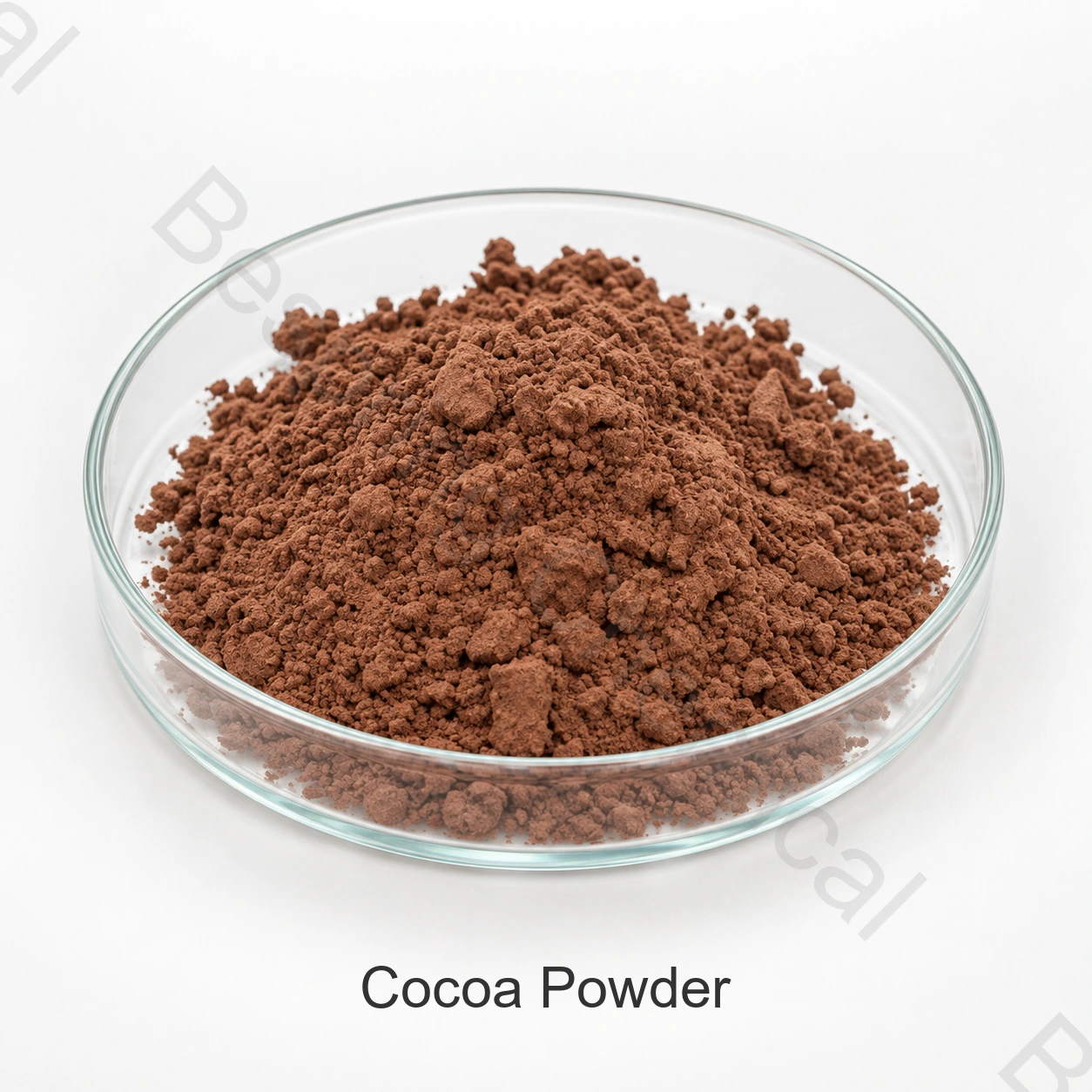
Product image · confirm grade and packaging when ordering
Share the exact grade, application, quantity, packing, destination and required documents.
GradeFood grade, subject to exact-source qualification
SpecificationCurrent document available from sales
PackingConfirmed in the source-specific offer
Batch evidenceCurrent COA available for supplied lots
Direct product answer
Cocoa powder is produced by transforming cocoa cake into powder. Commercial grades differ in cocoa-butter content, natural or alkalized processing, pH, color, flavor, fineness and microbiological profile, so grade selection is application specific.
Commercial suitability depends on the exact source, intended function, full food process and destination-market rules. This page supports preliminary qualification; the current signed specification and batch COA supplied by sales govern the order.
Procurement checklist
Compare the offered grade, application requirements and commercial terms before requesting a sample or placing an order.
State the required processing type and its role in the recipe. Compare samples for flavor, color and the intended pH rather than selecting a grade by darkness alone.
Provide the leavening system, mixing and baking conditions. Assess the cocoa grade in the complete recipe because a change in acidity can affect formulation balance.
Describe wetting, mixing, homogenization and storage conditions. Evaluate clumps and sediment in the finished beverage; do not treat ordinary cocoa powder as completely water-soluble.
Agree fat content, analytical basis, fineness and microbiological criteria for the exact source. Include quantity, packing, destination and the approved color sample in the RFQ.
Application screening
These are formulation screening areas, not universal approvals, dosage recommendations or guaranteed outcomes. Confirm legal use and technical performance in the finished food.
Balance pH, leavening, color, flavor and moisture absorption in the actual recipe.
Evaluate wettability, dispersibility, sediment, flavor, sugar system and processing.
Match fat content, fineness, color and flavor to fillings, coatings and compound systems.
Screen color, flavor release, dispersion and microbiology for the intended process.
Technical selection
The treatment changes pH, color and flavor; put the exact grade on the RFQ.
Compare grades on an agreed dry-matter test basis.
Use approved physical samples and instrumental targets where consistency is critical.
Set appropriate criteria and controls for the low-moisture finished-food process.
Private technical documentation
Bespring Chemical does not publish product specifications for this ingredient online. Contact the sales team for the current source-specific specification or TDS and confirm that its revision, test methods and acceptance criteria match your purchase requirements.
Request the current signed specification or TDS, SDS, analytical methods, representative COA and batch COA.
Verify applicable food-safety, quality, origin, allergen, Kosher, Halal and site certificates for the exact grade and source.
Review the Codex Standard for Cocoa Powders (CXS 105-1981), then apply current destination-market rules to the exact finished food.
Compliance note: International identity references do not by themselves authorize every application. The buyer is responsible for confirming the food category, use level, label declaration and other requirements in each destination market.
Storage and handling
Buyer questions
Natural cocoa powder is not alkali treated. Alkalization changes acidity and can change color and flavor. Choose the treatment against the finished recipe, leavening system and approved sensory target.
No. Cocoa powder contains insoluble material and forms a dispersion. Test wetting, mixing and sediment in the actual beverage; instant dispersibility depends on the grade and formulation.
Specify a fat range and analytical basis appropriate to the recipe. Fat content is not chemical purity. Request the current source specification instead of assuming a numerical low-fat or high-fat grade is available.
A grade may suit both, but the acceptance tests differ. Bakery assessment includes leavening and baked color; beverage assessment also includes wetting, dispersion and sediment during storage.
Provide natural or alkalized treatment, fat range, pH and color target, application, quantity, packing and destination. Request the proposed source's current specification, representative COA and sample availability.
Content updated 2026-09-13.
Related sourcing
Browse the full portfolio and available technical product dossiers.
Discuss a private specification, documents, sample and commercial requirements.
Review sourcing and export support for international ingredient procurement.
Related application guidance: Beverage dispersion and stabilization · Sauce and filling process stability · Chocolate ingredient selection.
Specification-led sourcing
Share the exact grade or type, application, critical performance requirements, quantity, packing, destination and document list for a relevant proposal.
Tell us your grade and destination market so we can confirm which documents are available for your order.
An external reference is not a batch certificate or a Bespring product specification.