food grade cellulose derivatives supplier
State the exact grade or type, application, quantity, packing, destination and required documents.

Food grade ingredient · Hydrocolloid and texture system · CD
Cellulose derivatives are a family of food hydrocolloids with different substitution, viscosity and thermal behavior; the exact derivative and grade must be named.
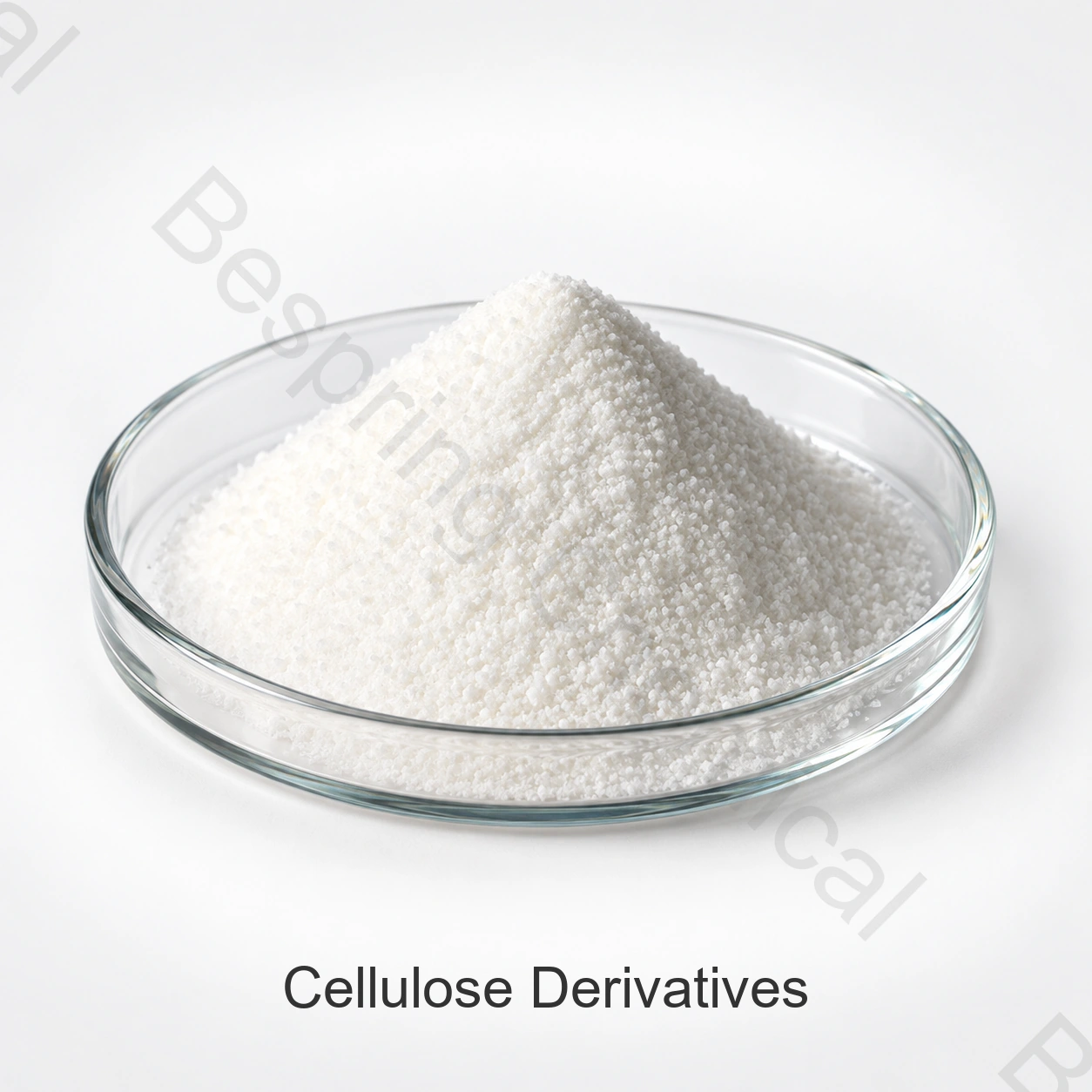
Product image · confirm grade and packaging when ordering
Share the exact grade, application, quantity, packing, destination and required documents.
GradeFood grade, subject to source qualification
SpecificationCurrent document available from sales
PackingConfirmed in the source-specific offer
Batch evidenceCurrent COA available for supplied lots
Direct product answer
Cellulose derivatives are a family of food hydrocolloids with different substitution, viscosity and thermal behavior; the exact derivative and grade must be named.
Commercial suitability depends on the exact source, intended function, complete food process and destination-market rules. This page supports preliminary qualification; the current signed specification and batch COA supplied by sales govern the order.
Procurement checklist
Compare the offered grade, application requirements and commercial terms before requesting a sample or placing an order.
State the exact grade or type, application, quantity, packing, destination and required documents.
Request a source-specific offer with current specification, Incoterm, destination and delivery window.
Share the full formula, process conditions, target function and finished-product tests.
Qualify identity, methods, COA, SDS, certificates, traceability and change-control expectations.
Application screening
These are screening areas, not universal approvals, dosage recommendations or guaranteed outcomes. Confirm legal use and technical performance in the finished food.
Test the complete recipe through mixing, heating, cooling and serving. Compare viscosity, separation and texture against an approved control.
Identify whether the problem is sedimentation, protein instability or mouthfeel. Test the selected grade with the actual protein, mineral and heat-processing conditions.
Match ingredient behavior to water availability, sugar concentration and the thermal cycle. Assess the finished product after representative storage.
Set measurable targets for flow, water separation and texture. Use the same preparation and test conditions when comparing candidate grades.
Technical selection
Specify the individual polymer, botanical source, modification and any standardizing ingredients. A family name does not identify one interchangeable commercial grade.
Agree concentration, water quality, hydration time, temperature and instrument settings. Viscosity results from different methods cannot be compared as equivalent specifications.
Run trials at the actual recipe pH, mineral content, soluble solids and heat load. Check the effect of ingredient addition order.
Match microbiological criteria, source and allergen declarations to the intended food. Confirm the exact ingredient identity and destination label requirements.
Private technical documentation
Bespring Chemical does not publish product specifications for this ingredient online. Contact sales for the current source-specific specification or TDS and confirm that its revision, methods and criteria match your purchase requirements.
Request the current signed specification or TDS, SDS, analytical methods, representative COA and batch COA.
Verify applicable food-safety, origin, allergen, Kosher, Halal and site certificates for the exact grade and source.
Review the FAO/WHO JECFA specifications and Codex GSFA, then apply current destination-market rules to the exact finished food.
Compliance note: An international identity or standard does not authorize every application. Confirm food category, use level, label declaration and other requirements in each destination market.
Storage and handling
Buyer questions
Cellulose derivatives are a family of food hydrocolloids with different substitution, viscosity and thermal behavior; the exact derivative and grade must be named. The current signed specification for the exact source governs supply.
Polymer family; exact derivative required; INS depends on derivative; CMC, methylcellulose, HPMC or other. Family and formulated products require the exact member and full composition to be confirmed.
Bespring Chemical does not publish specifications for this product online. Contact sales for the current source-specific specification or TDS, methods and representative COA.
Request the current specification or TDS, SDS, representative and batch COA, plus relevant food-safety, allergen, origin, Kosher, Halal and site documents for the exact source.
Provide the exact grade or type, application, critical performance needs, quantity, packing, destination market, required certificates, Incoterm and delivery date.
Content updated 2026-09-13.
Related sourcing
Browse the full portfolio and available technical product dossiers.
Discuss a private specification, documents, sample and commercial requirements.
Review sourcing and export support for international ingredient procurement.
Specification-led sourcing
Share the exact grade or type, application, critical performance requirements, quantity, packing, destination and document list for a relevant proposal.
Tell us your grade and destination market so we can confirm which documents are available for your order.
An external reference is not a batch certificate or a Bespring product specification.